

Hundreds of Millions of Dollars Have Been Recovered for Injured Babies and Children
Fill out and submit the form below for a confidential doctor/lawyer review:
"*" indicates required fields
A child brain injury lawyer investigates how the injury happened, whether someone is legally responsible and what support your child may need as they grow. The work extends beyond today’s hospital bills. It includes the medical, educational and practical effects that can change a family’s daily life and the child’s future independence.
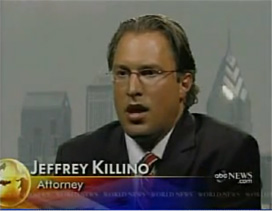
At Child Injury Firm, Jeffrey Killino and our team help families make sense of those questions after serious accidents, unsafe care and other potentially preventable events. You do not need a complete explanation of the injury before asking for help. A confidential case review can identify what evidence is available and whether a legal investigation is appropriate.


A child’s injury affects a brain that is still developing. Some difficulties are clear immediately; others become more apparent when schoolwork, communication or everyday tasks become more demanding. An early assessment is important, but it may not answer every long-term question.
This is why a pediatric brain injury claim should consider the child’s developmental stage and pre-injury abilities. Medical and school records can help explain changes without assuming that every later challenge came from the accident. Appropriate specialists assess the individual child, while the legal team examines what those findings mean for treatment costs, support needs and the evidence required to establish the claim.
A useful assessment looks at the child’s life before and after the event. For a toddler, the comparison may involve play, language, sleep and the amount of help needed with ordinary routines. For an older child, it may involve reading, planning, friendships, fatigue and the ability to finish work independently. Comparing only school grades can miss a change: a child may maintain a grade because a parent is now spending hours providing help that was unnecessary before the injury.
Development also affects the timing of evaluation. A skill that has not yet been expected cannot always be meaningfully assessed in the same way as an established ability. That does not mean every difficulty emerging later must have resulted from the accident. It means the medical and educational evidence should be considered together, with appropriate attention to prior development and other explanations. The legal record should accurately describe both the improvements and the continuing limitations.
Parents’ observations can identify questions for clinicians, but an injury claim should not depend on parents becoming diagnosticians. Dated notes about a change in routine are more helpful than repeatedly asking a child to perform a difficult task. The legal team can use those observations to identify relevant records and specialists while keeping the child’s care and normal family relationships at the center of the process.
Only a healthcare professional can diagnose a brain injury. Changes in behavior, attention, sleep, balance or feeding can warrant medical assessment, even when the child cannot describe what feels wrong. Symptoms may not be obvious at the scene.
The CDC’s concussion guidance identifies emergency warning signs including seizures, repeated vomiting, worsening headache and difficulty waking. Seek emergency care for concerning symptoms rather than waiting for a legal consultation. For children returning to school or sports, follow the treating clinician’s instructions. Keep a factual record of changes you notice, but avoid repeatedly testing your child or asking them to demonstrate symptoms for evidence.
Claims can arise from vehicle crashes, dangerous property conditions, falls, unsafe equipment, inadequate supervision and other events. The legal issue is not simply which category the accident falls into, but whether a preventable failure caused the injury.
A child injured in a crash may need an investigation into the driver and other responsible parties. A fall at a supervised facility may raise questions about the condition, warnings and adult response. Our child traffic accident information and school injury page explain related situations. Each investigation should follow the facts rather than assume that every accident gives rise to a lawsuit.
The necessary investigation changes with the setting. In a vehicle collision, the team may need the crash report, available recordings, vehicle information and evidence about the occupants’ positions. The question may involve a driver’s conduct, an employer’s responsibility or a product failure. Those possibilities should be tested against the evidence rather than treated as equally likely simply because the injury was serious.
A fall at a school or childcare facility raises a different sequence of questions. What condition caused the fall? How long had it existed? Who controlled the area, and what supervision was reasonably required? A photograph taken afterward may show a broken surface without establishing whether that condition caused the accident. Witness accounts and records of earlier complaints can help distinguish a relevant hazard from an unrelated imperfection.
Sports and recreation cases also require care. An injury during ordinary play is different from a claim that responsible adults ignored a dangerous condition or allowed a child to continue participating after a suspected concussion. The review may concern the initial incident, the response afterward or both. A child head injury lawyer should identify the particular failure under investigation, explain the applicable duties and avoid assuming that all harm occurring during an organized activity belongs to the organization.
A parent or another authorized representative may be able to pursue a claim when negligence caused a child’s brain injury. Generally, the evidence must establish a legal duty, a failure to meet that duty, a causal connection and legally recognized harm.
The injury itself does not establish negligence. An investigation must address what reasonable care required in the actual circumstances and whether a different response would have prevented the harm. Our article, Can I Sue If My Child Suffered a Brain Injury Due to Negligence?, explains those requirements and the questions families can ask before deciding how to proceed.
Potential defendants depend on the cause of the injury. They may include a driver, an employer, a property owner, a school or daycare, a healthcare provider or a product manufacturer. More than one party may require investigation.
We examine each party’s actual conduct, duties and connection to the harm. For example, an equipment defect and inadequate supervision may present different legal questions in the same incident. The existence of an insurance policy does not itself establish liability. Our guide to who can be held liable for a child’s brain injury discusses how these responsibilities can overlap and why the person nearest the accident is not always the only relevant party.
A strong investigation combines evidence of the event, medical evidence linking it to the injury and documentation of the consequences. Accident reports and a diagnosis serve different purposes; both may need supporting material.
Video, witness accounts, photographs, equipment records and communications can help establish what happened. Medical assessments and the child’s documented functioning help explain the effects. Relevant footage can disappear quickly, so early preservation may be important even if the prognosis is still developing. Read our article on evidence needed to prove a child brain injury lawsuit for a fuller explanation of what families and their legal team may need to gather.

There is no reliable standard amount. The value depends on the injury’s effects, the child’s reasonably expected needs, available evidence, applicable law and sources of recovery. A large verdict from another case does not predict your family’s outcome.
An evaluation may consider therapy, medical care, equipment, assistance, educational support and an injury-related reduction in future earning capacity. These losses need a factual basis. For a detailed discussion of long-term planning and the factors that affect compensation, see How Much Is a Child Brain Injury Case Worth?. We assess the individual child’s circumstances rather than use a settlement calculator to stand in for evidence.
The deadline varies by state, claim type and defendant. Rules that protect a minor’s claim do not necessarily protect every related claim or excuse a missed notice requirement. Families should not assume they can wait until adulthood.
Cases involving medical treatment, public entities or a parent’s separate expenses may follow different timelines. Early advice can address those differences while records and witnesses remain available. Our guide to filing deadlines for a child’s brain injury lawsuit explains why a fact-specific deadline review matters even when your child’s long-term condition is not yet fully understood.
Yes, when evidence shows that a healthcare provider’s departure from the professional standard of care caused injury. An infant brain injury lawyer may need to examine prenatal care, delivery, newborn treatment or later pediatric care, depending on the facts.
These cases require careful separation of a medical complication from a preventable error. A difficult delivery or diagnosis does not automatically prove malpractice. Where oxygen deprivation around birth is the concern, our HIE lawyer page addresses that specific condition. This service page remains focused on the broader range of childhood brain injury claims, with links to the more specialized medical topics.
A traumatic brain injury involves an external force. Other acquired brain injuries can arise through different processes, including a loss of oxygen or a stroke. The distinction helps identify which medical and legal evidence is relevant; it does not establish negligence by itself.
For families asking about an infant stroke, brain bleeding or seizures, the first task is to understand the clinical diagnosis and possible causes. A seizure is a finding that requires medical evaluation, not a legal conclusion about who is responsible. Our infant hematoma information explains why the location and type of bleeding matter. The claim should follow the documented mechanism rather than apply one explanation to every form of childhood brain damage.
Within traumatic injuries, the medical records may describe a contusion, bleeding, swelling or damage distributed across the brain’s connecting pathways. These findings are not interchangeable descriptions of severity. An injury involving a localized impact can raise different clinical questions from a diffuse injury associated with substantial acceleration or rotation. The National Institute of Neurological Disorders and Stroke explains the distinction between focal and diffuse damage. The child’s own findings, rather than a label taken from a general article, guide the assessment.
A nontraumatic acquired brain injury may require a different evidence trail. After an oxygen-deprivation event, the investigation may concern how long the danger continued, what rescue or medical response occurred and what the clinical findings show about timing. An infant stroke claim may instead require review of the pregnancy or newborn records and appropriate specialist interpretation. A stroke or seizure diagnosis does not establish that a provider caused the condition, and failure to prevent a condition is a different allegation from failure to recognize or treat its consequences.
This distinction also protects the claim from an overly broad explanation. A family may have been told that every problem is attributable to a difficult birth, even when another later event deserves review. Conversely, an accident may occur in a child who already had medical or developmental difficulties. The relevant question is what additional harm, if any, the event caused. A complete history allows experts to examine that question honestly and helps the legal team avoid attributing every limitation to a single defendant without support.
It should examine the child’s demonstrated limitations and reasonably anticipated support, rather than assume the first discharge plan describes an entire lifetime. Relevant evidence may come from treating clinicians, therapists, educational assessments and qualified care-planning professionals.
A child may need help with communication, mobility, learning, self-care or safe participation in daily activities. Those needs differ substantially between children. School observations can offer useful context, but they should be considered alongside appropriate medical evidence. Our discussion of the lifelong impacts of a child injury explains why practical changes at home and school deserve attention alongside the diagnosis.
The starting point is a functional assessment, not a generic list of services. Physical therapy, occupational therapy, speech-language services, neuropsychological assessment and other support have different purposes. The treating team determines what is clinically appropriate. A legal care plan should explain which needs are supported, how frequently assistance is expected and whether those needs are likely to change. It should not assume every child requires every available therapy or a fixed amount of lifelong supervision.
School records add a practical perspective. A child may need a quieter setting, changes to workload, assistance with organization or a coordinated return after injury. The specific arrangements should follow appropriate clinical and educational assessment. Notes documenting why a support was introduced can be more informative than a label alone. The CDC’s return-to-school guidance describes collaboration between families, healthcare providers and schools after concussion; a child with more extensive injuries may require a different individualized plan.
Long-term costs also involve how support is delivered. A wheelchair that meets a current need may require replacement; a home modification may be useful only if the child actually needs it; a parent’s present availability does not establish that the same informal care will be sustainable indefinitely. Qualified professionals may examine equipment, assistance, transport and transitions into adulthood. The legal team then needs evidence linking the claimed services and costs to the injury, with reasonable assumptions rather than the largest imaginable total.
This work should remain sensitive to the child’s progress. Evidence of improvement is important and should be included, just as persistent difficulties should not be dismissed because a child looks well in a brief appointment. A well-supported claim describes what the child can do independently, where help remains necessary and how those findings affect the care and support being claimed.
An inconclusive scan does not answer every clinical or legal question. The treating team determines which assessments are appropriate, and a legal investigation considers the complete medical evidence rather than requiring a particular image as the only proof of injury.
Conversely, symptoms alone do not establish that a specific defendant caused them. The child’s history, examinations, treatment and specialist opinions all matter. We do not promise that a particular imaging technique will prove a case or that every persistent difficulty is permanent. The aim is to understand the evidence accurately and identify which questions require further clinical review.
Brain imaging is one part of clinical assessment. The type of scan, when it was obtained and the question it was intended to answer matter. A result that excludes one urgent problem does not necessarily evaluate every aspect of attention, processing, behavior or daily functioning. The CDC’s pediatric mild TBI guidance cautions against routine imaging simply to diagnose mild TBI. A lawsuit should not push a child toward unnecessary testing or imply that the absence of a particular scan defeats every claim.
The converse is equally important: an abnormal image does not, on its own, establish the cause or the effect on the child. A proper review may consider examinations, developmental history, appropriate testing and observations across settings. The attorney’s task is to assemble and explain the evidence with qualified experts, not promise that an advanced imaging method will always reveal an otherwise unprovable injury.

An early offer should be assessed against the evidence and the consequences of resolving the claim. A settlement usually involves giving up the right to seek more compensation for the same injury, making careful evaluation especially important for a growing child.
Where the law requires it, a minor’s settlement must receive court approval and the funds may need an approved protective arrangement. The appropriate process depends on the jurisdiction and circumstances. Before agreeing to an offer, ask how future needs, unresolved medical questions and any repayment obligations have been considered. We can explain those issues and help your family evaluate the next step.
Ask which uncertainties have been investigated and which remain. An offer may cover bills already received without addressing an anticipated course of rehabilitation or an unresolved educational assessment. That is a reason to evaluate the evidence carefully, not proof that every offer is unfair or that settlement must wait indefinitely. A decision should reflect the supported prognosis, the strength and risks of the claim and the legal deadlines that apply.
For a child with substantial needs, settlement planning may also require advice about how funds will be held, access to benefits and who will be authorized to manage the money. A structured payment arrangement, trust or other mechanism is not suitable merely because it was used in another child’s case. Appropriate legal and financial specialists can explain the options under the applicable law. The family should understand both the proposed recovery and the practical arrangements that will protect the child’s interests after the claim ends.
Get medical care first. Call emergency services or go to the emergency department if your child loses consciousness, has a seizure, vomits repeatedly, becomes confused or very sleepy, or has a headache that gets worse. After a less obvious blow, call the pediatrician the same day and follow the instructions you are given about monitoring and rest.
Once your child is safe, write down what happened while you remember it: where, when, who was present and what you saw in the hours afterward. Photograph the scene and any hazard, keep the clothing or equipment involved and save the discharge papers. Avoid posting details on social media or giving a recorded statement to an insurer before you understand your options.
Recovery varies widely. Some children with mild injuries return to their usual activities after a period of rest and monitoring, while children with moderate or severe injuries may have lasting differences in thinking, behavior, movement or communication. A developing brain can adapt in some respects, but that does not guarantee recovery, and some effects only appear as school and social demands grow.
That uncertainty affects the legal side. A claim should not rest on the earliest prognosis, and a lawyer will usually want treating clinicians to follow your child’s progress over time. Keep therapy, school and follow-up records, since they show what your child could do before the injury and what has changed.
Many states reduce or bar recovery when an injured person shares responsibility, but young children are often held to a different standard than adults, and very young children are frequently treated as incapable of negligence. The rules depend on the state and the child’s age.
Defendants sometimes argue instead that a parent did not supervise closely enough. That argument is fact-specific, varies by state and does not necessarily reduce the child’s own claim. Tell your lawyer exactly what happened, including details that feel uncomfortable, so the analysis is based on the full account.
Most child injury cases settle without a trial, and a young child is rarely asked to testify. If a case does go to trial, the court considers the child’s age and ability, and testimony from parents, teachers and clinicians often carries the central evidence about the child’s daily life.
Parents should expect to answer written questions and possibly give a deposition. A lawyer can prepare you and explain which steps involve your child directly. A medical examination by an expert the defendant chooses is more common than testimony, and your lawyer can tell you what to expect from it.
Personal injury and medical malpractice firms commonly work on a contingency fee, which means fees are paid from a settlement or verdict rather than billed by the hour. Case expenses are treated separately, so ask how they are handled if there is no recovery.
When the injured person is a child, many states require court approval of the attorney’s fee, and some limit the percentage, so a judge reviews the fee before the settlement is final. Ask for the fee agreement in writing at the start and ask what the fee would be at each stage of the case.
In many states a court approves a child’s settlement and decides how the funds are held. Options can include a restricted bank account, a structured settlement that pays over time or a trust. The money is for the child, and parents generally cannot treat it as household funds.
For a child with long-term needs, how the funds are arranged can affect eligibility for needs-based public benefits such as Medicaid or Supplemental Security Income. A special needs trust is one tool designed for that purpose. Ask your lawyer about this before accepting any offer, and consider consulting a planner experienced with these arrangements.
Timing depends on the court, the defendants and how settled the child’s medical picture is. Straightforward cases can resolve faster, but cases involving serious injuries often take years because the child’s future needs have to be estimated with confidence.
A longer timeline can sometimes help the child, since settling before the prognosis is understood risks accepting too little. It also means deadlines and evidence preservation should be addressed early, even if the resolution is far off.
Start by telling us what happened, where your child was treated and what concerns remain. You do not need to have collected every record or determined who is responsible. We can identify the information needed to evaluate a possible child brain injury claim.
Contact Child Injury Firm for a confidential review. Our goal is to give your family a clear account of the evidence, the legal options and the work needed to pursue accountability when another party caused preventable harm.
Brain injuries are deceptive. A toddler doesn’t use the “logic” centers of their brain yet. You may not see the true damage until they reach the 3rd or 4th grade, when they cannot handle complex math or social cues.
Yes. A concussion is a mild Traumatic Brain Injury. Repeated concussions in sports can lead to “Second Impact Syndrome,” which is life-threatening.
Usually, you sue the landlord or the property owner. However, if a pediatrician failed to test for lead after you reported symptoms, they may also be liable. Lead poisoning is a toxic acquired brain injury that causes progressive, irreversible structural damage. While often framed as a developmental delay, lead mimics calcium to cross the blood-brain barrier, destroying the protective myelin sheath and triggering the death of brain cells.
The Scale of the Crisis
Establishing Liability These injuries are almost entirely preventable. Our child brain injury lawyers investigate the “chain of neglect” to hold responsible parties accountable, including:
We use “Day-in-the-Life” videos and expert testimony to show the struggle of daily life, the pain of surgeries, and the loss of a “normal” childhood experience.
This is a legal tool our team uses to hold settlement funds so they don’t disqualify your child from government benefits like Medicaid or SSI.
The answer depends heavily on the type of institution and your state’s specific laws. While many facilities can be held accountable, pursuing a claim against a public school is often more complex than a claim against a private daycare due to legal protections known as “sovereign immunity.”
The Barrier of Immunity In many states, public school districts are granted “governmental immunity,” which can shield them from certain types of lawsuits. Some states have “Tort Claims Acts” that allow you to sue a school only under very specific conditions or up to a certain financial cap. However, private schools and daycares generally do not have these protections and are held to standard negligence laws.
How Liability Is Established If the facility is not immune, our child brain injury lawyers investigate two primary types of negligence:
Why Speed Is Critical Because the laws surrounding school litigation are strict, often requiring “Notice of Claim” filings within just 60 to 90 days, it is essential to act quickly. If you are searching for a child brain injury lawyer to handle a claim, our team can help determine if “sovereign immunity” applies in your case and work to secure surveillance footage and maintenance logs before they are overwritten or repaired.
Bicycle accidents are a primary cause of Traumatic Brain Injuries (TBI) in children, as a child’s thinner skull provides significantly less protection during impacts with vehicles or pavement.
When a head hit occurs, cognitive symptoms such as memory loss, irritability, or “mental fog” may be delayed, requiring immediate diagnostic evaluation to document the full extent of the neural damage.
Most cases settle out of court, but our team prepares every case for trial. Many cases are resolved through negotiation with negligent medical professionals before reaching trial. This is why insurance companies take us seriously.
Yes. Our child brain injury lawyers have handled cases nationwide. We can coordinate with local experts to ensure the law is followed correctly.
Call our team. We offer a free case review to help families determine if they have a valid child brain injury claim, including a trustworthy review of your child’s medical records. If we don’t think there is a case, we will tell you the truth.
K
Keri S
1 year ago

T
Trisha H
1 year ago
C
Courtney S
1 year ago
R
Rhonda L
1 year ago
M
Michaelene C
1 year ago
C
Corey E
1 year ago
J
Jeanne Y
1 year ago
R
Reggie B
1 year ago
At The Child and Birth Injury Firm, we believe that every child deserves a future without limits. While we cannot undo the injury, we can ensure that your child has the best medical care, the best education, and the best quality of life possible. We’ve spent decades fighting these battles, and we are ready to fight yours.
Secure your child’s future today.
For over 2 decades, Jeffrey Killino and his team have secured life-changing results for babies and children facing catastrophic injuries. Our clients gain access to the best medical care, financial security, and peace of mind, knowing their futures are protected.
Jeffrey Killino and his team of child and birth injury lawyers are committed to go beyond securing multi-million dollar settlements and verdicts. We measure our success by our positive impact on our clients’ lives. We’re dedicated to supporting them throughout their journey, even after their case is resolved.
Jeffrey Killino and his team of child and birth injury lawyers are committed to more than just securing multi-million dollar settlements and verdicts. We measure our success by our positive impact on our clients’ lives, helping them access the best medical care, achieve financial security, and find peace of mind. We also actively work to prevent injuries and promote safety for everyone.
Text With Us
We'll text you!
"*" indicates required fields
By submitting, you agree to be contacted about your request & other information using automated technology. Message frequency varies. Msg & data rates may apply. Text STOP to cancel. Privacy Policy
Call Me
We'll call you!
"*" indicates required fields
By submitting, you agree to be contacted about your request & other information using automated technology. Message frequency varies. Msg & data rates may apply. Text STOP to cancel. Privacy Policy
Book A Consultation
We're ready to answer your questions!
Email Us
We're available by email!
"*" indicates required fields
By submitting, you agree to be contacted about your request & other information using automated technology. Message frequency varies. Msg & data rates may apply. Text STOP to cancel. Privacy Policy
Text With Us
We'll text you!
"*" indicates required fields
By submitting, you agree to be contacted about your request & other information using automated technology. Message frequency varies. Msg & data rates may apply. Text STOP to cancel. Privacy Policy
Call Me
We'll call you!
"*" indicates required fields
By submitting, you agree to be contacted about your request & other information using automated technology. Message frequency varies. Msg & data rates may apply. Text STOP to cancel. Privacy Policy