


Hundreds of Millions of Dollars Have Been Recovered for Injured Babies and Children
"*" indicates required fields
A pediatric medication error lawyer helps families seek compensation when a child is harmed by a preventable mistake in prescribing, preparing, dispensing, administering, or monitoring medication. Parents and guardians often need this guidance because pediatric medication errors can involve the wrong medication, dose, concentration, route, timing, patient, and the harm to a child can be immediate, serious, and expensive to treat.
Not every bad medical outcome proves negligence. In these cases, medical malpractice generally requires proof of an applicable duty or standard of care, a departure from that standard, medical causation, and legally recognized damages, with the exact requirements depending on the jurisdiction and the facts. To protect your child’s rights, you should first understand which pediatric medication errors support a legal claim, the applicable medical standards, who bears liability, available compensation, the investigative process, critical filing deadlines, and common litigation questions.

Children are not simply smaller adults. Medication selection and dosing may depend on weight, age, body-surface area, kidney and liver function, the medication and indication, route of administration, concentration, maximum-dose limits, and other clinical factors. Some pediatric medications are weight-based, while others are not.
A medication may be clinically appropriate in one circumstance and inappropriate in another. Whether prescribing or administering a medication was negligent requires review of the child’s condition, available information, applicable clinical standards, and the provider’s conduct.
Antibiotics do not treat viral infections, and unnecessary antibiotic use can expose a child to side effects and contribute to antimicrobial resistance. Amoxicillin, azithromycin, and other antibiotics may nevertheless be appropriate for particular bacterial infections. Using an antibiotic alone does not establish negligence.
Psychostimulants, including methylphenidate, are commonly used to treat attention-deficit/hyperactivity disorder when clinically appropriate. Diagnosis and treatment generally require an appropriate clinical assessment and follow-up to support an accurate diagnosis before prescribing or adjusting medication; a neurological evaluation is not necessarily required in every case. Providers should consider relevant medical history, contraindications, potential adverse effects, and appropriate monitoring.
Systemic corticosteroids can cause important adverse effects, particularly with prolonged or high-dose use. Potential effects may include adrenal suppression, impaired growth, bone effects, immune effects, and other complications. Risk depends on the medication, dose, duration, route, and the child’s condition. Inhaled and short-course therapies may have different risk profiles and may be medically appropriate.

Failure to provide a medication or other treatment may be clinically significant when the treatment was indicated and the delay or omission caused injury. The legal significance depends on the facts and applicable standard of care. In pediatric care, delayed diagnosis or delayed treatment can worsen a child’s illness and overall outcomes, including allowing diseases such as cancer to spread.
Children may experience undertreated pain in some clinical settings. Appropriate pain management requires an individualized assessment of the child’s condition, age, weight, medical history, medication risks, and response to treatment, especially because children may struggle to communicate symptoms effectively to doctors, which can complicate pain assessment and affect the child’s health. An allegation of inadequate pain treatment requires evidence that the care departed from the applicable standard and caused compensable harm.
Epinephrine is the first-line treatment for suspected anaphylaxis. Delayed or omitted epinephrine may contribute to serious injury, and when anaphylaxis is not treated promptly, oxygen deprivation may cause brain injuries or even death depending on the timing, severity, treatment, and other circumstances. Caregivers should seek emergency medical assistance immediately for suspected anaphylaxis.
Some children with seizure disorders receive individualized rescue-medication plans. A delay, omission, or dosing error may be harmful, but the outcome depends on the seizure’s cause and duration, the child’s condition, the medication used, and the timing and effectiveness of treatment. Prolonged seizures require emergency medical care.
Medication errors can occur in outpatient clinics, pharmacies, emergency departments, intensive-care units, operating rooms where they may overlap with surgical errors, and during transitions between providers or hospital departments. Risks may increase when care involves complex dosing, multiple medications, urgent treatment, communication failures, incomplete histories, or changes in responsibility.
Research has identified medication-safety risks in neonatal and pediatric intensive-care settings, but error frequency and causes vary by study and institution. Claims about rates should be supported by the specific study, patient population, and clinical setting.
A decimal or calculation error can produce a dangerous dose, but not every dosing error causes serious injury or death. Evaluation requires review of the prescribed dose, administered dose, formulation, concentration, timing, the child’s clinical condition, and resulting effects.

Perhaps the most obvious and immediately dangerous medication errors involve administering the completely wrong drug, a grossly incorrect dose, or a medication the child is known to be allergic to. Because a child’s developing body cannot easily process toxins, these fundamental errors can have catastrophic or fatal consequences. Such preventable mistakes often occur in the following ways:
When a provider fails to verify the “Five Rights” of medication administration (right patient, right drug, right dose, right route, and right time) or ignores a documented allergy, it generally represents a clear departure from the accepted medical standard of care.
Pharmacists serve as a critical final safeguard before a child receives a medication. When a pharmacy error occurs, the consequences for a pediatric patient can be devastating. Liability for a pharmacy error generally arises when a pharmacist, pharmacy technician, or the corporate pharmacy entity departs from the accepted standard of pharmacy practice. Common pediatric pharmacy errors that may support a legal claim include:
When a pharmacy’s negligent dispensing, improper compounding, or failure to adequately counsel parents causes compensable harm to a child, the individual pharmacist and the pharmacy itself may be held legally responsible for the resulting damages.

An investigation to gather evidence in potential pediatric medical malpractice cases may include:

EHR audit information may help establish when records were created, accessed, viewed, printed, transmitted, modified, or formally amended, depending on the system and the information it retains. Audit information alone does not establish negligence, intentional alteration, or medical causation. Relevant records and audit data may be obtained and preserved through lawful requests, patient authorizations, subpoenas, litigation holds, court orders, or formal discovery, subject to applicable privilege, confidentiality, authentication, relevance, proportionality, privacy, and procedural requirements.
Pharmacokinetic or toxicological analysis may help evaluate whether medication exposure contributed to an injury. Such analysis is evidence for consideration with the clinical record; it does not necessarily establish causation by itself.
Life-care planners, economists, vocational experts, and other specialists may be appropriate when the injury involves substantial future-care needs or impaired earning capacity. Their opinions are estimates based on medical, vocational, economic, and legal assumptions and do not guarantee a particular recovery.
Depending on the facts, a claim may involve a prescriber, pharmacist, pharmacy, nurse, physician, hospital, or other healthcare provider involved in prescribing or treating the child’s medical condition. Responsibility is not automatic and generally depends on the party’s duty, conduct, relationship to the child, causation, and applicable law.
A hospital may potentially be responsible for:
A hospital is not automatically liable for every error by an independent contractor. Governmental immunity, agency principles, corporate-negligence doctrines, and other defenses may also apply.
It is a preventable event and one type of medical error that may result in inappropriate medication use or harm. Common examples include an incorrect medication, dose, concentration, route, timing, patient, or administration instruction. A medication error does not necessarily establish negligence or injury.
Potentially responsible parties depend on who owed a duty and whose conduct caused the injury. They may include a prescriber, pharmacist, pharmacy, nurse, hospital, or other entity. The facts and governing law control.
The deadline varies by jurisdiction and may depend on the claim, defendant, injury date, discovery of the injury, the child’s age, and any statute of repose or governmental-claim requirement. Minority tolling is not uniform. Prompt evaluation by our pediatric medication error legal team is important.
It is an error involving a dose that should have been calculated, verified, or administered using the child’s weight or another individualized dosing factor. Not every pediatric medication is strictly weight-based.
Possibly, depending on the pharmacy’s relationship with the hospital, the hospital’s own conduct, agency principles, and applicable law. Respondeat superior generally concerns an employer’s potential responsibility for an employee’s conduct within the scope of employment; it does not create automatic liability in every case.
Seek prompt medical attention, including emergency care when appropriate, if a medication error is suspected or the child may have received an incorrect medication or dose. Preserve medication containers, instructions, and related records when safe to do so while advocating for the best possible care. Parents may also consider a second opinion if they have ongoing concerns about the child’s condition or treatment plan and want to protect the child’s well being. Medical treatment should not be delayed to investigate a potential legal claim.
A forensic economist may estimate economic losses, such as future medical expenses or lost earning capacity, using information from medical, life-care, vocational, and economic experts. The analysis is an estimate and does not guarantee that all projected losses are legally recoverable.
Some cases settle, while others proceed to trial, arbitration, dismissal, or another resolution. The result depends on the evidence, applicable law, defenses, damages, insurance, and the parties’ decisions. No outcome is guaranteed.

The Child Injury Firm represents children, parents, and families in selected pediatric malpractice cases involving catastrophic injuries caused by medication errors and medical negligence. When a child is harmed by an incorrect dosage, the wrong prescription, ignored drug allergies, or pharmacy dispensing errors, our legal team helps families evaluate their legal options, determine if they have a viable malpractice claim, and seek justice.
If you suspect your child suffered harm due to a pediatric medication error, you may request a free initial consultation with our experienced pediatric medication error malpractice attorneys. Because pediatric pharmacology is highly specialized and every child’s physiology is unique, each case is rigorously evaluated on its specific facts to ensure the child’s rights are fully protected.
The Child Injury Firm’s attorneys represent clients in complex medical negligence matters. While the firm brings extensive experience and a dedicated track record to pediatric injury litigation, past results and professional qualifications do not guarantee a particular outcome.
Potentially responsible parties may include individual healthcare providers, children’s hospitals, health systems, pharmacies, laboratories, or other entities. Liability depends on the provider’s conduct, employment or agency relationship, applicable law, and the evidence connecting the conduct to the injury.
The standard generally concerns the care and skill reasonably expected of a similarly situated provider under similar circumstances. The standard may differ by specialty, setting, available information, and jurisdiction. It is not necessarily required that every provider practice at the level of the most highly specialized physician.
Possibly, but the answer depends on state law and the facts. Theories may include direct negligence, vicarious liability, actual agency, apparent or ostensible agency, negligent credentialing, or other recognized theories. A hospital is not automatically liable for every physician who treats a patient there. Federal emergency-treatment law under the Emergency Medical Treatment and Labor Act, 42 U.S.C. §§ 1395dd–1395dd(e), imposes specific obligations on participating hospitals in certain emergency-department situations. It does not create a general rule of hospital liability for medical malpractice.
The Child Injury Firm handles pediatric malpractice cases on a contingency fee basis. This always means you don’t need to pay upfront. The written agreement should explain the percentage charged, responsibility for litigation expenses, expert fees, liens, costs advanced by the firm, and what happens if there is no recovery. Fee arrangements are subject to applicable law and professional-conduct rules.
A life-care plan is an individualized assessment of reasonably probable future medical, rehabilitation, equipment, therapeutic, and support needs. It should be based on the child’s condition and appropriate medical opinions. It is not a guarantee of future costs or recovery.
Not necessarily. Whether a child testifies depends on the issues, the child’s age and ability to understand, evidentiary rules, court procedures, and litigation strategy. Courts may consider measures designed to reduce unnecessary stress, but no result can be guaranteed.
Many pediatric medical-malpractice claims resolve privately, and the parties may agree to keep settlement terms confidential. Confidentiality is not automatic, however, and may be limited by court rules, public-record requirements, reporting obligations, subpoenas, or other applicable law. Settlements involving minors often require court approval or another protective process, depending on the jurisdiction. Related filings may be public unless the court permits redactions or sealing based on a legally sufficient showing. Our attorneys may seek appropriate privacy protections, but it is usually confidential.
A preexisting condition does not automatically defeat a claim. Experts may assess the child’s condition before and after the alleged negligence and determine whether the provider caused a new injury, aggravated an existing condition, accelerated a decline, contributed to developmental delays, or caused a different outcome. The legal effect of a preexisting condition depends on jurisdiction-specific causation and damages rules.
There is no reliable nationwide timetable. Duration depends on applicable pre-suit procedures, the complexity of the medical issues, the number of parties, expert discovery, court schedules, settlement negotiations, trial, and appeals. Some matters resolve in months; others take substantially longer. Our experienced attorneys can guide families through the legal process in pediatric medical malpractice cases.
K
Keri S
1 year ago

T
Trisha H
1 year ago
C
Courtney S
1 year ago
R
Rhonda L
1 year ago
M
Michaelene C
1 year ago
C
Corey E
1 year ago
J
Jeanne Y
1 year ago
R
Reggie B
1 year ago
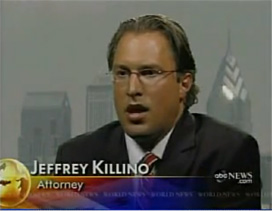
Catastrophic child and birth injuries can shatter the lives of not just the babies and children, but also their families. Families are left to navigate a complex maze of medical challenges, financial burdens, and emotional turmoil. But, this is where Jeffrey Killino and his team of dedicated lawyers can provide the support and guidance families need most.
For over 2 decades, Jeffrey Killino and his team have secured life-changing results for babies and children facing catastrophic injuries. Our clients gain access to the best medical care, financial security, and peace of mind, knowing their futures are protected.
Jeffrey Killino and his team of child and birth injury lawyers are committed to go beyond securing multi-million dollar settlements and verdicts. We measure our success by our positive impact on our clients’ lives. We’re dedicated to supporting them throughout their journey, even after their case is resolved.
Jeffrey Killino and his team of child and birth injury lawyers are committed to more than just securing multi-million dollar settlements and verdicts. We measure our success by our positive impact on our clients’ lives, helping them access the best medical care, achieve financial security, and find peace of mind. We also actively work to prevent injuries and promote safety for everyone.
Text With Us
We'll text you!
"*" indicates required fields
By submitting, you agree to be contacted about your request & other information using automated technology. Message frequency varies. Msg & data rates may apply. Text STOP to cancel. Privacy Policy
Call Me
We'll call you!
"*" indicates required fields
By submitting, you agree to be contacted about your request & other information using automated technology. Message frequency varies. Msg & data rates may apply. Text STOP to cancel. Privacy Policy
Book A Consultation
We're ready to answer your questions!
Email Us
We're available by email!
"*" indicates required fields
By submitting, you agree to be contacted about your request & other information using automated technology. Message frequency varies. Msg & data rates may apply. Text STOP to cancel. Privacy Policy
Text With Us
We'll text you!
"*" indicates required fields
By submitting, you agree to be contacted about your request & other information using automated technology. Message frequency varies. Msg & data rates may apply. Text STOP to cancel. Privacy Policy
Call Me
We'll call you!
"*" indicates required fields
By submitting, you agree to be contacted about your request & other information using automated technology. Message frequency varies. Msg & data rates may apply. Text STOP to cancel. Privacy Policy