


878-888-7878
878-888-7878

NATIONALLY RECOGNIZED

School Injury Lawyers

Child Trust Fund

Hundreds of Millions of Dollars Have Been Recovered for Injured Babies and Children

Fill out and submit the form below for a confidential doctor/lawyer review:

"*" indicates required fields

Step 1 of 2

Select all that apply:*

School Injury Attorney: Help for Families After a Child Is Hurt at School

When you send your child to school, you expect them to come home safe. When they don’t, because of a fall on a broken playground, a fight staff never stepped in to stop, or an injury during gym class, you deserve answers. A school injury attorney at The Child and Birth Injury Firm can help you find out what happened, hold the right people accountable, and pursue the compensation your family needs to move forward.

Schools stand in the place of a parent while your child is in their care. That means they have a legal duty to supervise students, maintain safe buildings and equipment, and respond appropriately when something goes wrong. When they fail at that duty, the results can range from a broken bone to a permanent, life-altering injury.

This page answers the questions families ask most often after a school accident, and explains how our team can help.

What Counts as a School Injury Case?

Not every scraped knee or minor bump is a legal case. A school injury claim typically involves negligence, meaning the school or its staff failed to act with reasonable care and that failure caused harm. Common examples include:
  • A child hurt because a playground was poorly maintained or a piece of equipment was defective
  • An injury during gym class or organized sports caused by inadequate supervision or unsafe conditions
  • A school bus accident or an injury in the “danger zone” around a bus
  • Bullying or a physical altercation the school knew about and failed to stop
  • Sexual abuse or physical abuse by a staff member, coach, or another student the school failed to properly screen or supervise
If your child suffered a documented physical or emotional injury and you believe the school could have prevented it, it’s worth talking to an attorney.

What Should I Do Right After My Child Is Injured at School?

The first 48 hours matter more than most parents realize. What you do, and don’t do, in that window can shape whether a future claim succeeds.
  1. Get an independent medical evaluation. Even if the school nurse says your child is fine, concussions and internal injuries aren’t always obvious right away. A visit to your pediatrician or an emergency room creates a neutral medical record.
  2. Request a copy of the incident report. Schools are required to document injuries. Ask for it right away, before the narrative can be shaped by the district’s legal team.
  3. Identify witnesses. Other students often see what happened before a teacher or staff member does. Write down names while memories are fresh.
  4. Document the scene. If a broken swing, a torn mat, or a damaged locker caused the injury, take photos before it gets repaired or removed.
  5. Avoid recorded statements to the school’s insurer until you’ve spoken with an attorney.

Where Do Most School Injuries Actually Happen?

Classrooms are, statistically, the safest place in a school. The real risk sits in a handful of predictable locations.

Are Playgrounds Really That Dangerous?

Yes. According to the Centers for Disease Control and Prevention, more than 200,000 children ages 14 and younger are treated in emergency rooms each year for playground-related injuries. A large share of these are severe, involving fractures, internal injuries, or concussions. Liability often comes down to a simple question: was the impact surface, mulch, rubber, or sand, kept at the proper depth? A worn-down or hardened surface is a common basis for a claim.

What About Gym Class and School Sports?

There’s a real legal line between the ordinary risk of sports and negligence. Cases we see most often involve a coach who failed to provide water breaks or rest during extreme heat, or a staff member who ignored concussion protocols and let a child return to play too soon. The American Academy of Pediatrics has warned that skipping “return to play” guidelines is a leading cause of Second Impact Syndrome, a preventable and often catastrophic brain injury.

Are School Buses a Common Source of Injury?

Yes, and the danger usually isn’t inside the bus. It’s the roughly 10-foot zone around it, sometimes called the danger zone, where children are struck while boarding, exiting, or crossing the street. Bus drivers, like teachers, have a legal duty to supervise students during transportation. Drivers who pass a stopped school bus, sometimes called stop-arm violations, remain a leading cause of student pedestrian deaths, according to the National Association of State Directors of Pupil Transportation Services.

Can a Defective Product Be the Real Cause of a School Injury?

Sometimes. A school injury isn’t always about a teacher looking away for a moment. Equipment failures cause real harm, and these cases fall under product liability law rather than simple negligence.

  • Playground equipment: Manufacturing defects in S-hooks, climbing nets, or slides can catch clothing or cause serious falls.
  • Gymnasium equipment: Collapsing bleachers or an improperly anchored basketball hoop can cause crush injuries.
  • Science lab chemicals: Mislabeled or improperly stored chemicals in a high school lab can lead to burns or toxic exposure.

In these cases, we may need to pursue a claim against the equipment manufacturer in addition to, or instead of, the school district.

Does My Child's Age Affect the Case?

It does, quite a bit. Courts and insurers look at age when deciding how much supervision a school owed a child.

  • Elementary school (ages 5 to 10): These children are least able to recognize obvious dangers, which places a higher burden of supervision on the school. Playground injuries are most common in this age group.
  • Middle school (ages 11 to 13): This is the age range with the highest rates of school bus accidents, along with physical altercations and bullying.
  • High school (ages 14 to 18): Injuries here tend to be sports-related, or they happen in vocational classes involving power tools and heavy machinery.

What Hidden Risks Are Parents Not Hearing About?

Some of the most serious school injury risks have nothing to do with a fall or a fight.

Could My Child Be Exposed to Lead or Asbestos at School?

In older school buildings, especially in cities like Philadelphia and Chicago, the building itself can be the hazard. An EPA report found that more than half of U.S. schools have not recently tested their drinking water for lead. Chronic exposure to lead or asbestos can cause developmental harm that looks remarkably similar to a birth injury: lowered IQ and memory problems, coordination issues resembling cerebral palsy, and behavioral changes often mistaken for something else entirely.

Is Heat Illness a Real Legal Concern for Student Athletes?

In states like Florida, yes. Florida leads the nation in heat-related illness among student athletes, and the Korey Stringer Institute notes that many high schools still lack cold-water immersion tubs, the most effective way to prevent death during a heat stroke emergency.

Can a Playground Surface Actually Burn a Child?

It can. Modern rubberized playground surfaces can reach temperatures above 160 degrees Fahrenheit in direct sun. We’ve handled cases involving second-degree burns from a child simply falling onto a “safety” surface that was actually a hazard

What Is "Negligent Supervision," and How Do I Prove It?

Negligent supervision is the legal theory behind most school injury claims. To succeed, your attorney generally needs to show three things:

  1. The school owed your child a duty of care. This is rarely in dispute, since schools are legally required to supervise students.
  2. The school breached that duty. This could mean a teacher left a classroom unattended, a hallway monitor was missing during a known bullying hotspot, or a school failed to train staff on safety protocols.
  3. That breach caused the injury. There has to be a direct link between the lack of supervision and the harm your child suffered.

Schools are expected to anticipate that children won’t always follow the rules perfectly. A “no running in the halls” policy doesn’t erase a school’s responsibility if a genuine lack of oversight is what allowed a rule violation to turn into a serious injury.

Can the School Blame My Child for Getting Hurt?

Sometimes a school will argue that your child’s own actions contributed to the injury, a defense known as contributory negligence. For example, if a student ignored safety instructions during a school-sponsored activity, the school may try to shift some blame onto the student.

Even so, a school can still be held liable if inadequate supervision was part of what allowed the injury to happen. Contributory negligence can reduce a settlement in some states, but it rarely eliminates a valid claim outright. An experienced school injury attorney can assess how your state’s specific rules will affect your case.

Why Is Suing a Public School Different From Suing a Private One?

This is one of the most important distinctions in school injury law, and it’s why timing matters so much.

Public schools are government entities. Suing one means navigating sovereign immunity, a legal doctrine that limits when and how you can sue a government body. Two things follow from this:

  • Short notice deadlines. Many states require you to file a formal “Notice of Claim” with the school board within 60 to 180 days of the injury. Miss that window, and you may permanently lose your right to sue.
  • Damage caps. Many states cap how much a family can recover from a public entity, regardless of how serious the injury is.

Private schools are not government entities, so these rules generally don’t apply. Instead, private school cases may involve contractual terms or arbitration clauses that can shape how a claim proceeds. Either way, the legal path is different enough that getting an attorney involved early is one of the most valuable things you can do.

Talk to a School Injury Attorney Today

If your child has been seriously hurt at school, you don’t have to sort through sovereign immunity rules, notice deadlines, and insurance company tactics on your own. Our team at The Child Injury Firm has spent decades helping families hold negligent schools and school districts accountable, and we understand that children’s injuries require long-term planning, not a quick settlement.

Contact us today for a free, confidential consultation about your child’s school injury case.

Frequently Asked Questions About School Injury Lawsuits

Yes, if it can be shown that the school had prior notice of the bullying and failed to take reasonable steps to prevent the incident that caused the injury.
Usually, yes, at least in part. Waivers generally don’t protect a school from gross negligence. If a coach knowingly let a child play with a head injury, courts often find the waiver unenforceable. Rules vary by state.
A school’s duty of care extends to off-site activities. If the field trip venue, like a zoo or museum, was unsafe, you may be able to pursue a claim against the school and the venue.
Schools have a duty to provide reasonable supervision and a safe environment. If a fight continued for an extended period without staff intervening, that can support a negligent supervision claim. Liability still depends on your state’s laws and the specific facts involved, so it’s worth a consultation.
Typically not. You’ll usually need to cover costs through insurance or out of pocket first, then seek reimbursement through a settlement or verdict.
This covers injuries caused by the building or grounds themselves, such as slippery floors, loose handrails, or falling ceiling tiles.
This typically falls under product liability rather than school negligence. In these cases, we may pursue a claim against the manufacturer of the furniture or equipment involved.
Because of Notice of Claim requirements and the pace of government bureaucracy, these cases often take longer than a typical personal injury claim, sometimes several years, before reaching a settlement or trial.
A school’s responsibility doesn’t necessarily end at the final bell. If the program is school-sponsored or takes place on school property under staff supervision, the district may still be liable, depending on whether it maintained the same standard of care as during regular school hours.
Not necessarily. Schools may argue that a student’s rule-breaking, like running in the hallway, contributed to the injury. But courts recognize that children don’t always follow instructions perfectly. If a genuine lack of supervision is what allowed the situation to escalate, a claim can still hold up.

Practice Areas

Testimonials

Child & Birth Injury Lawyers: Making a Difference When It Matters Most

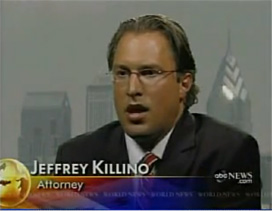
Catastrophic child and birth injuries can shatter the lives of not just the babies and children, but also their families. Families are left to navigate a complex maze of medical challenges, financial burdens, and emotional turmoil. But, this is where Jeffrey Killino and his team of dedicated lawyers can provide the support and guidance families need most.

Life-Changing Financial Security

For over 2 decades, Jeffrey Killino and his team have secured life-changing results for babies and children facing catastrophic injuries. Our clients gain access to the best medical care, financial security, and peace of mind, knowing their futures are protected.

Ongoing Client Support and Protection

Jeffrey Killino and his team of child and birth injury lawyers are committed to go beyond securing multi-million dollar settlements and verdicts. We measure our success by our positive impact on our clients’ lives. We’re dedicated to supporting them throughout their journey, even after their case is resolved.

Caring for Clients and the Community

Jeffrey Killino and his team of child and birth injury lawyers are committed to more than just securing multi-million dollar settlements and verdicts. We measure our success by our positive impact on our clients’ lives, helping them access the best medical care, achieve financial security, and find peace of mind. We also actively work to prevent injuries and promote safety for everyone.
abc-1-1.jpg

NO COST, NO OBLIGATION,
CONFIDENTIAL CONSULTATION.

Text With Us

We'll text you!

"*" indicates required fields

This field is for validation purposes and should be left unchanged.
Name*
This field is hidden when viewing the form

By submitting, you agree to be contacted about your request & other information using automated technology. Message frequency varies. Msg & data rates may apply. Text STOP to cancel. Privacy Policy

Call Me

We'll call you!

"*" indicates required fields

This field is for validation purposes and should be left unchanged.
Name:*
This field is hidden when viewing the form

By submitting, you agree to be contacted about your request & other information using automated technology. Message frequency varies. Msg & data rates may apply. Text STOP to cancel. Privacy Policy

Book A Consultation

We're ready to answer your questions!

Email Us

We're available by email!

"*" indicates required fields

This field is for validation purposes and should be left unchanged.
Name:*
This field is hidden when viewing the form

By submitting, you agree to be contacted about your request & other information using automated technology. Message frequency varies. Msg & data rates may apply. Text STOP to cancel. Privacy Policy

Text With Us

We'll text you!

"*" indicates required fields

This field is for validation purposes and should be left unchanged.
Name*
This field is hidden when viewing the form

By submitting, you agree to be contacted about your request & other information using automated technology. Message frequency varies. Msg & data rates may apply. Text STOP to cancel. Privacy Policy

Call Me

We'll call you!

"*" indicates required fields

This field is for validation purposes and should be left unchanged.
Name:*
This field is hidden when viewing the form

By submitting, you agree to be contacted about your request & other information using automated technology. Message frequency varies. Msg & data rates may apply. Text STOP to cancel. Privacy Policy