


Hundreds of Millions of Dollars Have Been Recovered for Injured Babies and Children
Fill out and submit the form below for a confidential doctor/lawyer review:
"*" indicates required fields
When you walk into a hospital to give birth, you aren’t just a patient; you are placing two lives in the hands of strangers. You rely on their training, their equipment, and their oath to do no harm. But in high-stress medical environments, systems can fail, and that professional promise is sometimes shattered.
If you are searching for a birth injury lawyer, you are not alone. This resource is for West Virginia parents and families concerned about possible birth injuries caused by medical negligence. A birth injury lawyer is experienced in cases involving harm to infants or mothers due to healthcare provider negligence. A birth injury team of lawyers helps families in cases involving harm to infants or mothers due to healthcare provider negligence.
Birth injuries caused by medical errors can have a lasting impact on your baby’s health, leaving families searching for answers and support. Medical errors during delivery can compromise a baby’s health, sometimes resulting in serious and lifelong consequences. Was the emergency C-section called too late? Did the staff miss the warning signs on the monitor? Why aren’t they meeting milestones? Why won’t the doctor give me a straight answer? And most importantly, could this lifelong struggle have been prevented with better care?
We explain your legal rights, the claims process, and how to secure compensation for your child’s care. If you are reading this, you likely have a gut feeling that something went wrong during your delivery in West Virginia. Maybe it happened at a large teaching hospital in Morgantown or a regional medical center in Charleston. Maybe you were told it was “just a complication.” Unfortunately, approximately five to eight babies out of every 1,000 born in the United States sustain some form of birth injury, making this a more common experience than many realize. Medical negligence during a child’s birth can have a profound impact on the entire family, often leading parents to seek legal help to understand their options in West Virginia.
At The Child and Birth Injury Firm, we are skeptical of those explanations. We know that in medicine, “complications” can be code for “preventable errors.” Our mission is to advocate for birth injury victims and their families, helping them seek justice and compensation for the harm caused. We understand that a child’s birth injury can have devastating effects, and legal action is often necessary to hold negligent parties accountable and secure the resources your child needs.
For decades, our Team of Lawyers has been peeling back the layers of medical records to find the truth for families. We don’t just accept the hospital’s narrative. We investigate it. We cross-reference the fetal monitor strips with the nursing notes. We look at the staffing levels. We find the mistakes they hoped you wouldn’t notice. We recognize that birth injuries can impact every aspect of a child’s life, affecting their health, development, and future opportunities.
We are going to look at the hard data in West Virginia—the infant mortality rates, the preterm birth statistics, and the legal reality of filing a malpractice claim in the Mountain State. We want you to have the information you need to make the best decision for your child’s future.


Our firm is driven by hard evidence. While hospital administrators may attempt to soften the narrative, the raw medical data tells an objective story that cannot be spun.
West Virginia faces significant challenges in maternal and infant health. When a state struggles with overall health outcomes, it can mean the medical systems are under stress. And a stressed medical system is where errors happen. Common birth injuries, such as brachial plexus injuries, cerebral palsy, and fractures, are unfortunately prevalent in West Virginia and can result from these medical errors.
According to the 2024 March of Dimes Report Card, West Virginia received an “F” grade for its preterm birth rate.
Infant Mortality Disparities in the Coalfields. The West Virginia Department of Health reports that the statewide infant mortality rate remains concerning, but the averages often mask the severity of the crisis in specific regions.
Understanding the data is the first step. Next, let’s clarify what actually counts as medical malpractice in West Virginia and how it applies to birth injuries.


When a delivery results in injury, it is crucial to distinguish between unavoidable complications and preventable medical errors caused by negligence. Birth Injury medical malpractice occurs when healthcare providers fail to follow established safety standards known as the “Standard of Care”, missing critical warning signs that a reasonably prudent doctor would have recognized and acted upon. Our legal team meticulously analyzes the timeline of your birth to determine if a failure to respond quickly to fetal distress resulted in unnecessary harm. By proving that these deviations from the standard of care directly caused the injury, we fight to hold the hospital accountable and secure the justice your family deserves.
Now that you know what constitutes malpractice, let’s look at the most common preventable birth injuries investigated in West Virginia.


While every birth story is unique, the medical errors that cause permanent harm often follow specific patterns. Our legal team focuses on the “mechanism of injury”—the exact moment when a preventable mistake altered your child’s life.
The Mechanism: HIE is brain damage caused by a lack of oxygen and blood flow.
The Mechanism: CP is a neurological disorder affecting movement, often stemming from brain injury during labor.
The Mechanism: This injury occurs when the baby’s shoulder gets stuck behind the mother’s pelvic bone, and the nerves in the neck are stretched or torn.
The Mechanism: This is a rare, preventable brain injury caused by untreated high bilirubin levels.
If you suspect your child has suffered one of these injuries, here’s what to do next.


If you suspect your child has suffered a birth injury during the birthing process in West Virginia, taking swift and informed action is essential. The aftermath of a birth injury can be overwhelming, but knowing what steps to take can make a significant difference in your child’s future and your family’s peace of mind.
Follow these steps:
If you believe your child’s birth injury was caused by medical negligence, don’t wait. Contact our birth injury attorneys for a free consultation. You have the right to seek justice and ensure your child’s needs are met—now and for years to come.
Understanding the steps to take is crucial, but knowing the legal deadlines is just as important. Next, let’s discuss the statute of limitations in West Virginia.


In medical malpractice law, time is your enemy. West Virginia enforces strict deadlines, known as Statutes of Limitations. If you miss this window, the court will dismiss your case immediately, barring you from ever recovering the funds your child needs.
Now that you know the deadlines, let’s look at what compensation is available and the limits set by West Virginia law.


West Virginia limits non-economic damages in medical malpractice cases. These damages cover intangible harm such as pain and suffering, mental anguish, emotional distress, inconvenience, and loss of enjoyment of life, under W. Va. Code § 55-7B-8.
(a) In any professional liability action brought against a health care provider pursuant to this article, the maximum amount recoverable as compensatory damages for noneconomic loss may not exceed $250,000 for each occurrence, regardless of the number of plaintiffs or the number of defendants or, in the case of wrongful death, regardless of the number of distributees, except as provided in subsection (b) of this section.
(b) The plaintiff may recover compensatory damages for noneconomic loss in excess of the limitation described in subsection (a) of this section, but not in excess of $500,000 for each occurrence, regardless of the number of plaintiffs or the number of defendants or, in the case of wrongful death, regardless of the number of distributees, where the damages for noneconomic losses suffered by the plaintiff were for: (1) Wrongful death; (2) permanent and substantial physical deformity, loss of use of a limb or loss of a bodily organ system; or (3) permanent physical or mental functional injury that permanently prevents the injured person from being able to independently care for himself or herself and perform life-sustaining activities.
(c) On January 1, 2004, and in each year thereafter, the limitation for compensatory damages contained in subsections (a) and (b) of this section shall increase to account for inflation by an amount equal to the Consumer Price Index published by the United States Department of Labor, not to exceed one hundred fifty percent of the amounts specified in said subsections. (d) The limitations on noneconomic damages contained in subsections (a), (b), (c) and (e) of this section are not available to any defendant in an action pursuant to this article which does not have medical professional liability insurance in the aggregate amount of at least $1 million for each occurrence covering the medical injury which is the subject of the action.
(e) If subsection (a) or (b) of this section, as enacted during the 2003 regular session of the Legislature, or the application thereof to any person or circumstance, is found by a court of law to be unconstitutional or otherwise invalid, the maximum amount recoverable as damages for noneconomic loss in a professional liability action brought against a health care provider under this article shall thereafter not exceed $1 million.
Important: These limits apply per occurrence (regardless of the number of plaintiffs or defendants), and the statute includes certain insurance-related conditions for the caps to apply.
However, there is NO CAP on Economic Damages. This means there is no limit on the money we can recover for:
Since the cost of lifetime care for a child with Cerebral Palsy can be millions of dollars, the economic damages are usually the largest part of the claim anyway.
To maximize your recovery, you need a legal team with the right experience and resources. Here’s why choosing the right lawyer matters.


Birth trauma litigation is often said to be a battle of experts. You need an entire infrastructure designed to dismantle the defense’s medical arguments.
The Tools We Bring to the Fight:
We don’t estimate your child’s needs. We scientifically calculate the funding required to guarantee their safety and dignity for life.
Knowing the right team is important, but understanding where your case will be heard is also key. Let’s look at the most common hospitals and courts involved in West Virginia birth injury cases.


We are familiar with the protocols and systems at the major birthing centers across the country. While these hospitals do good work, high volume can sometimes lead to systemic errors or “alarm fatigue.”
In addition to hospitals, there are resources available to help families navigate life after a birth injury. Here are some key support organizations in West Virginia.


If you are raising a child with a birth injury, you are not alone. West Virginia has a network of resources designed to help. Ensuring your child receives proper medical care is crucial to prevent further complications and to support their long-term well-being.
If you decide to pursue a claim, it’s important to know where your case will be heard. Here’s what you need to know about the courts in West Virginia.
Understanding where your case will be filed is part of our strategy. In birth injury cases, the insurance company representing the hospital, doctor, or other liable party often plays a major role in settlement negotiations and litigation, working to minimize payouts and manage liability. Cases are typically filed in the Circuit Court of the county where the injury occurred.
U.S. District Courts (Federal Jurisdiction) While most malpractice lawsuits are filed in state court, there are specific legal triggers that may prompt your case into the Federal Court system (either the Southern District or Northern District of West Virginia). This typically happens in the following instances:
Most West Virginia birth injury lawsuits are resolved through out-of-court settlements, allowing families to receive financial payouts quickly.
Now that you know the process, let’s answer some of the most frequently asked questions about West Virginia birth injury cases.


Key Takeaways for West Virginia Parents

You didn’t cause this injury, but you are the only one who can demand justice for it. Our team is here to help you turn that demand into a secure, funded future that protects your child long after we are gone.
Disclaimer: The information provided on this website does not, and is not intended to, constitute legal advice; instead, all information, content, and materials available on this site are for general informational purposes only. Information on this website may not constitute the most up-to-date legal or other information.
Birth injuries are physical harm that a baby suffers during the birthing process, often as a result of birth trauma.
Yes, but the rules are different. Many rural clinics in West Virginia are Federally Qualified Health Centers (FQHCs). Under the Federally Supported Health Centers Assistance Act, their doctors are treated as federal employees.
The Deadline: The statute of limitations is more stringent, regardless of state law. This is more common in rural West Virginia cases.
K
Keri S
1 year ago

T
Trisha H
1 year ago
C
Courtney S
1 year ago
R
Rhonda L
1 year ago
M
Michaelene C
1 year ago
C
Corey E
1 year ago
J
Jeanne Y
1 year ago
R
Reggie B
1 year ago
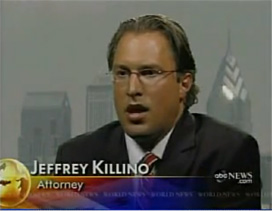
Catastrophic child and birth injuries can shatter the lives of not just the babies and children, but also their families. Families are left to navigate a complex maze of medical challenges, financial burdens, and emotional turmoil. But, this is where Jeffrey Killino and his team of dedicated lawyers can provide the support and guidance families need most.
For over 2 decades, Jeffrey Killino and his team have secured life-changing results for babies and children facing catastrophic injuries. Our clients gain access to the best medical care, financial security, and peace of mind, knowing their futures are protected.
Jeffrey Killino and his team of child and birth injury lawyers are committed to go beyond securing multi-million dollar settlements and verdicts. We measure our success by our positive impact on our clients’ lives. We’re dedicated to supporting them throughout their journey, even after their case is resolved.
Jeffrey Killino and his team of child and birth injury lawyers are committed to more than just securing multi-million dollar settlements and verdicts. We measure our success by our positive impact on our clients’ lives, helping them access the best medical care, achieve financial security, and find peace of mind. We also actively work to prevent injuries and promote safety for everyone.
Text With Us
We'll text you!
"*" indicates required fields
By submitting, you agree to be contacted about your request & other information using automated technology. Message frequency varies. Msg & data rates may apply. Text STOP to cancel. Privacy Policy
Call Me
We'll call you!
"*" indicates required fields
By submitting, you agree to be contacted about your request & other information using automated technology. Message frequency varies. Msg & data rates may apply. Text STOP to cancel. Privacy Policy
Book A Consultation
We're ready to answer your questions!
Email Us
We're available by email!
"*" indicates required fields
By submitting, you agree to be contacted about your request & other information using automated technology. Message frequency varies. Msg & data rates may apply. Text STOP to cancel. Privacy Policy
Text With Us
We'll text you!
"*" indicates required fields
By submitting, you agree to be contacted about your request & other information using automated technology. Message frequency varies. Msg & data rates may apply. Text STOP to cancel. Privacy Policy
Call Me
We'll call you!
"*" indicates required fields
By submitting, you agree to be contacted about your request & other information using automated technology. Message frequency varies. Msg & data rates may apply. Text STOP to cancel. Privacy Policy