



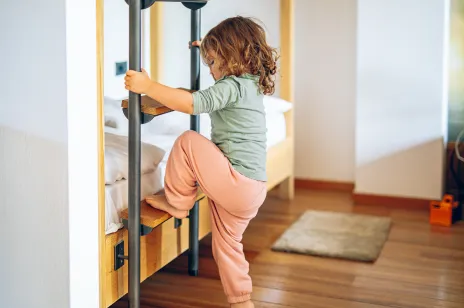
Yes, bunk beds can be dangerous because of falls, climbing, entrapment gaps and unsafe setup. Keep children younger than six off the top bunk, use the specified mattress and guardrails, and follow the manufacturer’s instructions. This guide covers everyday safety; our bunk-bed collapse guide addresses structural failure and related injury issues.
What Age Is Appropriate for the Top Bunk?
The American Academy of Pediatrics advises that children younger than six should not sleep in the top bunk. Reaching six does not remove every risk; a child still needs to use the ladder safely and follow the bed’s instructions.
Do not treat the lower bunk as automatically suitable for a toddler. Check the specific bed, mattress and manufacturer’s age guidance rather than transfer a top-bunk rule to every sleeping arrangement.
Which Guardrail and Mattress Details Should You Check?
Use the mattress size and thickness specified for the bed. A mattress that is too thick can reduce the protection provided by the guardrail; an incorrect fit can create gaps. Keep the required guardrails installed and follow the assembly instructions for their positioning.
Do not improvise repairs or add padding to disguise an unsafe opening. Ask the manufacturer about a missing part or an unclear instruction, and stop using a bed whose required safety components are damaged or absent.
How Can Children Use the Ladder More Safely?
Keep the climbing route clear, use the intended ladder and provide enough light for nighttime trips. Teach children to climb rather than jump down. Rules should also prevent jumping, pushing and rough play on the bunks.
A safety rule is useful only if the bed can actually be used as instructed. Consider room layout, access and whether your child can follow the rules consistently.
When Should You Stop Using a Bunk Bed?
Stop use if a rail, ladder, support or fastener is loose, missing or damaged. Check the model against applicable recall information and follow the manufacturer’s directions. Do not keep using a suspected unsafe bed while relying on closer supervision to compensate.
If the concern is collapse or a failed support, read the separate collapse guide rather than assume a general safety checklist resolves a structural defect.
Why Does the Mattress Thickness Matter as Much as the Bed Frame?
A bunk bed is designed to work with a particular mattress size and maximum thickness. Adding a thicker mattress or a topper can change the effective height of a guardrail above the sleeping surface. An incorrect length or width may also leave an unsafe space. Check the label and instructions for the bed itself rather than assume that any mattress sold under a familiar size name is suitable.
If the original instructions are missing, identify the manufacturer and model before choosing a replacement mattress. Do not estimate a safe fit by filling gaps with pillows, blankets or foam. Those additions do not correct an incompatible mattress or a missing structural component.
How Should You Arrange the Room Around a Bunk Bed?
Think about the space a child occupies while sitting up, climbing and getting out of bed, not only the floor space occupied by the frame. Keep the bed away from ceiling fans and other overhead hazards, and consider access to windows and window-covering cords. The manufacturer’s instructions should guide placement and clearances. A room that fits the frame may still be unsuitable for safe everyday use.
Keep the intended route to the ladder unobstructed. Clothing, toys and furniture should not force a child to lean across a gap or improvise a climbing route. If a child regularly needs help getting down at night, reassess whether the upper bunk is appropriate rather than rely on repeated reminders alone.
Can Ropes, Belts or Hanging Accessories Create Another Hazard?
Do not attach ropes, belts, scarves or similar items to a bunk bed. A child can become entangled, and an item added for play can create a serious hazard even when the frame is correctly assembled. Keep nearby cords inaccessible and avoid treating the bed as climbing equipment. Our information about window cord injuries explains why room hazards need attention beyond the sleeping surface.
Only use accessories approved for the specific model and follow the instructions for their placement. A homemade rail, added handle or makeshift ladder can introduce a new opening or weaken the intended arrangement. Contact the manufacturer about missing components rather than substitute a part that merely appears to fit.
What Should You Check When Buying or Receiving a Used Bunk Bed?
Identify the exact product and check available recall information before assembly. Ask for the instructions and verify that the required rails, supports, ladder and hardware are present. Look for damage, modifications and evidence that the frame was assembled incorrectly. A seller’s assurance that children used the bed without an accident does not establish that all required safety components remain intact.
If the model cannot be identified or the required parts cannot be obtained, do not guess at a safe assembly. Stop use when an unresolved defect or missing component prevents the bed from being used as instructed. A structural failure raises different questions from ordinary climbing and sleep habits; those issues are covered in our separate collapse article.
How Can Families Keep Safety Rules Consistent for Visiting Children?
Explain the rules to visiting children and other caregivers before the bed is used. The top bunk should not become a play platform simply because several children are sharing a room. Make clear who may sleep there, how the ladder is used and why jumping or pushing is unsafe. Check the arrangement again when a mattress, room layout or sleeping assignment changes.
Supervision supports safe use, but it cannot correct an unsuitable mattress, absent guardrail or damaged support. If the physical setup is unsafe, stop using it. This distinction helps families address the actual hazard instead of relying on instructions to compensate for a bed that cannot be used safely.
What Should You Review After Moving or Reassembling a Bed?
Moving a bed can disturb hardware or change the relationship between the bed, ladder and nearby hazards. Reassemble it according to the instructions and check that the required supports and guardrails are correctly secured before anyone sleeps in it. Do not leave the final checks until after a child has started using the upper bunk.
Recheck the mattress specification if bedding was replaced during the move. Teach children how to use the ladder in the new layout and make sure nighttime access is clear. If the room no longer allows the bed to be used as instructed, choose another sleeping arrangement rather than improvise an unsafe workaround.
Where Can You Find Reliable Bunk-Bed Safety Information?
See the American Academy of Pediatrics’ parent guidance and the CPSC’s bunk-bed safety requirements. Follow the instructions for your exact model as well.
If an injury has occurred, get appropriate medical care and retain the product information and available records. The cause of a particular accident requires investigation; this guide does not establish that every fall is a product-defect claim.