


Yes. You can sue for hypoxic-ischemic encephalopathy (HIE) when your baby’s brain injury was caused by a doctor, nurse, midwife, or hospital that failed to follow accepted medical standards during pregnancy, labor, delivery, or the first hours after birth.
However, not every HIE diagnosis means malpractice happened. A claim depends on showing that the oxygen deprivation was preventable with proper care, and that the failure to prevent it caused your child’s injury.
If your baby needed cooling treatment or a long NICU stay after a difficult delivery, you likely have urgent questions about what went wrong. Families who come to us for HIE birth injury representation work with an entire team of trial attorneys, medical experts, and investigators to get those answers.
What is hypoxic-ischemic encephalopathy?
HIE is a brain injury caused by too little oxygen (hypoxia) and too little blood flow (ischemia) reaching a baby’s brain. “Encephalopathy” simply means the brain isn’t working normally.
In newborns, HIE usually stems from events around labor and delivery. It affects roughly 1 to 3 of every 1,000 babies born in developed countries and is a leading cause of cerebral palsy, epilepsy, and lifelong disability in full-term infants.
Doctors often grade newborn HIE using a system called Sarnat staging roughly simplified below:
- Mild: Irritability and poor feeding
- Moderate: Lethargy, low muscle tone, and seizures
- Severe: Coma, absent reflexes, and a limp body
If you’re still making sense of your baby’s diagnosis, the Cleveland Clinic’s overview of HIE explains the condition in plain language.
When does HIE become a medical malpractice case?
An HIE lawsuit is a type of medical malpractice claim. To succeed, your family generally must prove four things:
- Duty of care: The provider was responsible for the care of the mother and baby. This is rarely disputed once a hospital admits a patient in labor.
- A breach of the standard of care: The provider did something a careful provider in the same specialty would not have done, or failed to do something they would have done.
- Causation: The breach caused or worsened the brain injury. Usually this means showing your baby would have avoided injury, or had a milder one, if the team had acted sooner.
- Damages: Your child and family suffered real losses, such as medical costs, lifelong care needs, and pain and suffering.

Causation is often the hardest-fought element. Hospitals commonly argue the injury happened before labor began or came from a cause no one could have prevented.
Separating preventable HIE from unavoidable HIE comes down to when the brain injury happened and whether warning signs were missed. The Killino Firm’s medical experts work through that question in every case we review.
Who can be held responsible for your baby’s HIE?
Depending on what happened, an HIE claim may name one or more of the following:
- Obstetricians and OB residents who manage labor and decide when to deliver
- Certified nurse-midwives
- Labor and delivery nurses who watch the fetal monitor and must alert physicians to problems
- Anesthesiologists, when anesthesia delays hold up an emergency delivery
- Neonatologists and NICU staff, for errors in newborn resuscitation or cooling
- The hospital itself, for its employees’ negligence or for system failures such as understaffing
Many HIE cases involve a system failure, a chain of smaller failures by several people rather than one dramatic mistake. In fact, missed monitor readings, a slow C-section, and a late cooling decision are among the labor and delivery errors linked to HIE.
Does cooling treatment affect your right to sue?
Therapeutic hypothermia, often called “cooling,” is the standard treatment for moderate-to-severe newborn HIE. Your baby’s body temperature is lowered for about 72 hours to slow the spread of brain injury.
A Cochrane research found that cooling should begin within six hours of birth for eligible babies. That window matters legally in two ways:
- Cooling is a clue. It tells you the medical team suspected an acute oxygen-deprivation event around birth. It doesn’t prove negligence, but it’s an important signal.
- Delayed cooling can be its own error. Late recognition of HIE, or a slow transfer to a cooling-capable NICU, can support a claim.
Babies who were cooled and seem to be doing well may still have claims, because some effects of HIE only appear as a child grows. Cooling delays are one of several NICU errors that can harm newborns.
Who files an HIE lawsuit?
Because a newborn can’t bring a lawsuit, a parent or legal guardian files on the child’s behalf. The child’s claim covers the child’s own losses, such as future medical care and lost earning ability.
Parents may also have separate claims of their own, such as for medical bills already paid. If a baby tragically passes away from HIE, the family may have a wrongful death claim.
Each type of claim can carry its own filing deadline.

What can an HIE lawsuit recover for your child?
Compensation in an HIE case is meant to cover the full cost of your child’s injury over a lifetime. That includes therapy, medical equipment, in-home nursing, special education, and pain and suffering.
Because severe HIE can require decades of care, the value of an HIE case is driven largely by the cost of that care. Every case is different, and no lawyer can promise a specific result.
Is there a deadline to sue for HIE?
Yes. Every state sets a statute of limitations for malpractice claims. Children’s claims often get extra time, but some deadlines are much shorter, especially for claims against public or federally funded hospitals.
Because HIE filing deadlines vary widely by state, the safest step is to speak with a lawyer soon after diagnosis, even if you aren’t ready to act.
How does the legal process work?
Working with Killino Firm for HIE birth injury representation is straightforward:
- Free, confidential case evaluation: You tell us what happened during pregnancy, labor, and delivery, and how your child is doing now.
- Records collection: Our team gets the mother’s and baby’s complete records, including fetal monitoring strips, cord blood gases, and MRI images.
- Expert review: Physicians and nurses in our medical network review the records for breaches of the standard of care.
- Filing: Many states require a certificate or affidavit from a qualified medical expert before, or soon after, a case is filed.
- Negotiation or trial: Most HIE cases resolve through settlement, but our trial attorneys prepare every case as if it’s headed to court.
Fetal monitoring strips and MRI images are usually the backbone of the evidence that proves an HIE malpractice case.
You won’t pay upfront for any of this. We cover investigation, expert, and court costs, and our fee comes only from a recovery.

Frequently asked questions
Can we still sue if the hospital said the HIE was unavoidable?
Yes, you can still have your case reviewed. Hospitals rarely volunteer that a mistake happened, and explanations like “the cord was wrapped” don’t answer whether the team responded properly.
Can we sue if our baby was diagnosed with mild HIE?
Possibly. Mild HIE is sometimes linked to developmental or learning problems that aren’t clear at birth.
Is HIE the same as birth asphyxia?
They’re related but not identical. Birth asphyxia is the oxygen deprivation event itself, while HIE is the brain injury that can follow.
How much does it cost to talk to a lawyer? Nothing. Consultations are free and confidential, and we work on a No Recovery, No Fee basis.
Get answers from a team that fights for injured babies
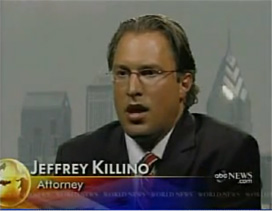
Led by Attorney Jeffrey Killino, a retired Board Member of the United Cerebral Palsy Association and with Super Lawyers recognition, our team fights for injured babies as if they were our own. We offer virtual meetings and a secure mobile app.
If your baby was diagnosed with HIE, our HIE birth injury lawyers are ready to find out what happened. Get your free, confidential case evaluation. Call 24/7 at 878-788-7718 or contact us online.
No upfront fees; client pays no legal fees unless a recovery is achieved.
The information provided on this site is not formal legal advice. Prior results do not guarantee a similar outcome. Confidential consultation is required.