



Hundreds of Millions of Dollars Have Been Recovered for Injured Babies and Children
"*" indicates required fields
A children’s hospital malpractice lawyer handles claims against a children’s hospital, doctor, nurse, or other healthcare provider when negligent pediatric care causes a child’s injury or death. For parents and guardians trying to find out whether they have a viable case, the key issues are whether the provider failed to meet the applicable standard of care, whether that failure caused harm, and how state law, medical records, expert review, damages, and filing deadlines affect the claim.
Pediatric hospital malpractice litigation involves complex grounds for liability, specific institutional failures like medication errors and birth injuries, and the rigorous investigation required to prove negligence and causation. Because a child’s injuries create immediate medical emergencies and lifelong care costs, families must possess a clear understanding of their exact legal rights and potential compensation before deciding how to proceed.

A hospital or healthcare provider may face a malpractice claim involving, among other circumstances:
A poor outcome alone does not establish malpractice. Generally, the claimant must prove the applicable duty or standard of care, a breach, medical causation, and legally recognized damages. Expert testimony is often required, although the precise requirements vary by jurisdiction and claim.
Hospitals may be pursued under different theories, including:
The availability and elements of these theories differ by state. A hospital is not automatically liable for every act of an independent-contractor physician.
A case investigation may include:
A life-care plan may estimate future medical and support needs. A forensic economist may evaluate future costs and, when legally recoverable, lost earning capacity. These analyses are estimates based on medical, vocational, economic, and legal assumptions; they do not guarantee a particular recovery.

Children may require different medication doses, monitoring, equipment, and clinical assessments than adults, and pediatric patients often face higher injury severity rates than adults because pediatric care raises distinct medical considerations from adult treatment. Pediatric dosing frequently depends on factors such as weight, age, body surface area, kidney and liver function, the medication involved, and the child’s clinical condition, and medication errors occur in 14% to 31% of pediatric patients annually, making them a significant factor in pediatric malpractice claims. Errors may occur during prescribing, transcription, dispensing, administration, or monitoring, but an adverse medication event does not by itself establish malpractice.
Potential issues may include:
Diagnosis-related claims account for 34% to 44% of pediatric cases, and neonatal claims often involve obstetrics-related treatment injuries. Neonates experience high-severity injuries at a rate of 75%.
Whether medical errors amount to malpractice requires a fact-specific medical and legal analysis. Conditions such as cerebral palsy or hypoxic-ischemic encephalopathy can have multiple causes, and causation must be established through appropriate evidence.

In the context of pediatric medical malpractice, a hospital “system failure” represents the most catastrophic form of negligence because it extends far beyond a single provider’s isolated mistake. These systemic breakdowns occur when a facility operates with inadequate policies, flawed procedures for safe and prompt care, and a fundamental lack of continuous safety training. Without a rigorous safety culture in place, a hospital loses its vital safety nets, allowing a vulnerable child to simply slip through the cracks. What begins as a single oversight rapidly cascades into mistake after mistake and miss after miss—whether through ignored alarms, miscommunications during shift changes, or unmonitored vital signs—until the window for intervention closes and serious harm or death occurs.
Holding a hospital accountable for a system failure requires proving this chain reaction of direct institutional negligence. It means looking past the individual nurses or physicians to examine the facility’s root operational flaws, such as staffing deficiencies, missing safety plans, and a prioritization of efficiency over patient monitoring. When a hospital’s very infrastructure sets the stage for a patient to be repeatedly failed, uncovering this systemic collapse through electronic health record (EHR) audit trails, staffing logs, and internal policy reviews is essential to proving liability and securing justice for a family’s profound loss.

A physician-malpractice claim generally concerns an individual provider’s alleged departure from the applicable standard of care. A hospital claim may involve the hospital’s own conduct, such as policies, staffing, supervision, equipment, or credentialing, or may seek to hold the hospital responsible for an employee’s conduct. The legal theories may overlap.
Possibly. Some jurisdictions recognize apparent- or ostensible-agency claims when the hospital’s conduct reasonably caused the patient to believe the physician was providing care on the hospital’s behalf. The requirements vary, and liability is not automatic.
The deadline depends on the governing jurisdiction, claim type, defendant, date of injury, discovery of the injury, the child’s age, and any applicable statute of repose or governmental-claims requirement. Studies have found that 76.7% of pediatric claims were filed within three years of the injury or event, so acting quickly can matter. Minor-tolling rules vary substantially and do not uniformly preserve a claim until age eighteen. Prompt legal evaluation is important when filing claims because some deadlines may be short.
Depending on applicable law, damages may include past and future medical expenses, rehabilitation, attendant care, assistive services, lost earning capacity, pain and suffering, emotional distress, loss of quality of life, and other forms of financial compensation. Wrongful-death and survival damages are governed by separate state-law rules. Damage caps and other limitations may apply.
Relevant evidence may include staffing assignments, patient-acuity records, schedules, policies, incident reports, and communications. Staffing evidence must be connected to a specific breach and to the child’s injury; staffing levels alone do not establish negligence.
Some claims resolve through settlement, while others proceed to trial or are dismissed. The outcome depends on the evidence, applicable law, damages, defenses, insurance, and the parties’ litigation decisions. No result can be guaranteed.
Medical experts may address the standard of care, breach, and causation. Life-care planners, economists, vocational experts, and other specialists may address future needs and damages when appropriate. Expert requirements vary by jurisdiction and issue.
Medication errors are recognized patient-safety risks, particularly because pediatric prescribing and administration may involve weight-based or otherwise individualized calculations. Frequency estimates vary by setting and study. The occurrence of an error does not alone establish legal liability.
The Child Injury Firm operates strictly on a contingency fee basis, meaning our catastrophic injury legal team advances all investigative costs and you pay zero attorney fees unless we secure a financial recovery for your family.
Protect your child’s physical well-being first. We advise parents to immediately secure a second medical opinion, confirm an accurate diagnosis, and stabilize the child’s treatment plan. Once your child’s immediate health is secured, our attorneys step in to investigate the institutional failures that caused the harm.
Families facing the staggering costs of pediatric medical errors require aggressive legal action, not upfront legal bills. We provide a comprehensive, zero-cost initial case evaluation to review your child’s medical records and outline your exact legal rights. When we accept a case, the specific terms of our contingency fee representation and our assumption of upfront litigation expenses are clearly defined in a written engagement agreement, fully compliant with ethical professional conduct rules.

Our catastrophic injury legal team dedicates its practice to holding negligent hospital corporations and their staff accountable for pediatric medical errors, systemic institutional failures, and preventable birth injuries. We meticulously evaluate the clinical evidence in every children’s hospital malpractice claim to secure the comprehensive compensation required to fully fund a child’s long-term developmental needs and life care plan. While past litigation results do not guarantee a specific outcome and our nationwide representation remains subject to formal written agreements and specific jurisdictional requirements, our team of accident lawyers utilizes exacting corporate investigative resources to expose facility negligence and secure your family’s financial recovery.
Potentially responsible parties may include individual healthcare providers, children’s hospitals, health systems, pharmacies, laboratories, or other entities. Liability depends on the provider’s conduct, employment or agency relationship, applicable law, and the evidence connecting the conduct to the injury.
The standard generally concerns the care and skill reasonably expected of a similarly situated provider under similar circumstances. The standard may differ by specialty, setting, available information, and jurisdiction. It is not necessarily required that every provider practice at the level of the most highly specialized physician.
Possibly, but the answer depends on state law and the facts. Theories may include direct negligence, vicarious liability, actual agency, apparent or ostensible agency, negligent credentialing, or other recognized theories. A hospital is not automatically liable for every physician who treats a patient there. Federal emergency-treatment law under the Emergency Medical Treatment and Labor Act, 42 U.S.C. §§ 1395dd–1395dd(e), imposes specific obligations on participating hospitals in certain emergency-department situations. It does not create a general rule of hospital liability for medical malpractice.
The Child Injury Firm handles pediatric malpractice cases on a contingency fee basis. This always means you don’t need to pay upfront. The written agreement should explain the percentage charged, responsibility for litigation expenses, expert fees, liens, costs advanced by the firm, and what happens if there is no recovery. Fee arrangements are subject to applicable law and professional-conduct rules.
A life-care plan is an individualized assessment of reasonably probable future medical, rehabilitation, equipment, therapeutic, and support needs. It should be based on the child’s condition and appropriate medical opinions. It is not a guarantee of future costs or recovery.
Not necessarily. Whether a child testifies depends on the issues, the child’s age and ability to understand, evidentiary rules, court procedures, and litigation strategy. Courts may consider measures designed to reduce unnecessary stress, but no result can be guaranteed.
Many pediatric medical-malpractice claims resolve privately, and the parties may agree to keep settlement terms confidential. Confidentiality is not automatic, however, and may be limited by court rules, public-record requirements, reporting obligations, subpoenas, or other applicable law. Settlements involving minors often require court approval or another protective process, depending on the jurisdiction. Related filings may be public unless the court permits redactions or sealing based on a legally sufficient showing. Our attorneys may seek appropriate privacy protections, but it is usually confidential.
A preexisting condition does not automatically defeat a claim. Experts may assess the child’s condition before and after the alleged negligence and determine whether the provider caused a new injury, aggravated an existing condition, accelerated a decline, contributed to developmental delays, or caused a different outcome. The legal effect of a preexisting condition depends on jurisdiction-specific causation and damages rules.
There is no reliable nationwide timetable. Duration depends on applicable pre-suit procedures, the complexity of the medical issues, the number of parties, expert discovery, court schedules, settlement negotiations, trial, and appeals. Some matters resolve in months; others take substantially longer. Our experienced attorneys can guide families through the legal process in pediatric medical malpractice cases.
K
Keri S
1 year ago

T
Trisha H
1 year ago
C
Courtney S
1 year ago
R
Rhonda L
1 year ago
M
Michaelene C
1 year ago
C
Corey E
1 year ago
J
Jeanne Y
1 year ago
R
Reggie B
1 year ago
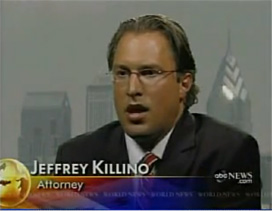
Catastrophic child and birth injuries can shatter the lives of not just the babies and children, but also their families. Families are left to navigate a complex maze of medical challenges, financial burdens, and emotional turmoil. But, this is where Jeffrey Killino and his team of dedicated lawyers can provide the support and guidance families need most.
For over 2 decades, Jeffrey Killino and his team have secured life-changing results for babies and children facing catastrophic injuries. Our clients gain access to the best medical care, financial security, and peace of mind, knowing their futures are protected.
Jeffrey Killino and his team of child and birth injury lawyers are committed to go beyond securing multi-million dollar settlements and verdicts. We measure our success by our positive impact on our clients’ lives. We’re dedicated to supporting them throughout their journey, even after their case is resolved.
Jeffrey Killino and his team of child and birth injury lawyers are committed to more than just securing multi-million dollar settlements and verdicts. We measure our success by our positive impact on our clients’ lives, helping them access the best medical care, achieve financial security, and find peace of mind. We also actively work to prevent injuries and promote safety for everyone.
Text With Us
We'll text you!
"*" indicates required fields
By submitting, you agree to be contacted about your request & other information using automated technology. Message frequency varies. Msg & data rates may apply. Text STOP to cancel. Privacy Policy
Call Me
We'll call you!
"*" indicates required fields
By submitting, you agree to be contacted about your request & other information using automated technology. Message frequency varies. Msg & data rates may apply. Text STOP to cancel. Privacy Policy
Book A Consultation
We're ready to answer your questions!
Email Us
We're available by email!
"*" indicates required fields
By submitting, you agree to be contacted about your request & other information using automated technology. Message frequency varies. Msg & data rates may apply. Text STOP to cancel. Privacy Policy
Text With Us
We'll text you!
"*" indicates required fields
By submitting, you agree to be contacted about your request & other information using automated technology. Message frequency varies. Msg & data rates may apply. Text STOP to cancel. Privacy Policy
Call Me
We'll call you!
"*" indicates required fields
By submitting, you agree to be contacted about your request & other information using automated technology. Message frequency varies. Msg & data rates may apply. Text STOP to cancel. Privacy Policy