



Hundreds of Millions of Dollars Have Been Recovered for Injured Babies and Children
"*" indicates required fields
Pediatric medical malpractice may occur when a provider fails to meet the applicable standard of care, and that failure causes injury or death to a child. Whether malpractice occurred depends on the facts, the medical evidence, and the law of the jurisdiction where the claim is brought.
Our attorneys investigate potential claims involving pediatricians, children’s hospitals, nurses, pharmacists, surgeons, anesthesiologists, and other healthcare providers — working with qualified medical and economic professionals to evaluate liability, causation, and your child’s current and future needs.

Pediatric medical malpractice is a fact-specific legal claim alleging that a healthcare provider failed to provide the level of care and skill reasonably expected of a similarly situated provider under similar circumstances, and that the failure caused legally compensable harm to the child. The applicable rules vary by state, including requirements for expert testimony, pre-suit review, filing deadlines, and limits on damages.
A poor medical outcome, treatment complication, or disagreement among healthcare professionals does not by itself establish malpractice. A claim generally requires evidence of:
A healthcare provider owes a direct, non-negotiable duty of care to a pediatric patient the moment a medical relationship is established, regardless of the child’s status as a legal minor. While parents and legal guardians hold the authority to sign admission paperwork and consent to treatment, the doctor-patient relationship—and the strict legal obligations that follow—belongs entirely to the child. The moment a pediatrician examines an infant, a pharmacist dispenses pediatric medication, or a hospital admits a teenager, that provider assumes a professional mandate to protect the child’s life and biological development. The child’s lack of legal capacity does not diminish the hospital’s clinical accountability; in fact, it demands a higher level of vigilance from the medical staff.
The precise scope of this duty scales directly with the provider’s specific role, the severity of the clinical circumstances, and applicable state law. Our pediatric malpractice legal team meticulously investigates the medical hierarchy of a hospital to identify every provider who assumed a duty of care over your child, ensuring no negligent party escapes liability.
The question is generally whether the provider’s conduct departed from the care and skill reasonably expected of a similarly situated provider under similar circumstances. A departure may involve an unreasonable failure to evaluate symptoms, order testing, diagnose a condition, obtain consultation, provide treatment, monitor the child, communicate important information, or respond to a deterioration.
A violation of an internal policy or clinical protocol may be relevant, but it is not automatically proof of legal negligence. Conversely, the absence of a written protocol does not necessarily establish that the care was appropriate.
Medical causation is proven by demonstrating that if the healthcare provider had adhered to the accepted standard of care, the child’s injury would have been avoided. Proving causation requires more than showing a doctor made a mistake. Defense attorneys routinely blame genetics, preexisting conditions, or unavoidable complications for a bad outcome. To defeat these defenses, our pediatric malpractice legal team must conclusively establish that the medical error itself inflicted the damage, and that proper intervention would have prevented the injury complained of.
Instead of accepting vague assertions that different treatment “might” have helped, our pediatric injury team dissects the complete medical timeline. We retain elite, independent medical experts to testify to a definitive reality: the defendant’s specific breach of duty directly caused the harm, and adhering to the standard of care would have kept your child safe.
Damages may include past and future medical care, rehabilitation, medications, assistive equipment, home modifications, educational or supportive services, pain and suffering, diminished earning capacity, and other losses recognized under applicable law. The availability and amount of damages depend on the facts, proof, the proper claimant, and state law. Some jurisdictions impose statutory limits on particular categories of damages.
When a child has long-term impairments, qualified medical or rehabilitation professionals may prepare a life-care plan addressing reasonably probable future needs. An economist may evaluate the projected costs and, when supported by the evidence, the effect of the injury on future earning capacity. These assessments are estimates, not guarantees of recovery.

A case investigation may involve reconstructing the medical timeline and reviewing medical records, imaging, laboratory results, medication records, fetal or neonatal monitoring, electronic-record information, witness accounts, and other available evidence. Depending on the injury and the issues presented, appropriate experts may include pediatric specialists, nurses, neurologists, surgeons, anesthesiologists, rehabilitation professionals, life-care planners, vocational experts, or economists.
Claims against hospitals or healthcare systems require separate analysis. Potential theories may include negligence by employed personnel, direct institutional negligence, vicarious liability, apparent or ostensible agency, negligent credentialing, or other theories recognized by the applicable state. A hospital is not automatically responsible for every physician who treats a patient at its facility.
Not every serious pediatric injury is preventable, and not every preventable injury results from malpractice. The central questions are whether the provider breached the applicable standard of care and whether that breach caused legally compensable harm.
Medical-malpractice law is highly jurisdiction-specific. Filing deadlines, minor-tolling rules, expert requirements, governmental-defendant rules, wrongful-death procedures, and damages vary by state.

Children may face special risks because medication doses, equipment, airway management, communication, and clinical assessment must be adapted to age, weight, development, and medical condition, and a child’s health may be harmed when pediatric care is not properly tailored. Medication-related harm, diagnostic delay, surgical errors, and treatment-related injuries can occur in many settings.
The existence of an adverse event does not establish malpractice. A medical professional may be liable only if the evidence shows that the provider failed to meet the applicable standard of care and that the failure caused compensable harm.
Potential areas for investigation may include:
A claim may arise when a provider fails to reasonably evaluate symptoms, obtain appropriate testing, secure an accurate diagnosis, consider a significant diagnosis, or arrange timely treatment with an appropriate treatment plan. Potentially serious conditions may include meningitis, appendicitis, pneumonia, sepsis, cancer, metabolic disorders, and other illnesses.
Whether a delay constitutes malpractice requires a fact-specific medical analysis. Symptoms may be nonspecific, conditions may evolve rapidly, and reasonable providers may differ in their assessments. If you have significant concerns about a diagnosis or recommended care, seeking a second opinion may help.
Medication-related claims may involve the wrong medication, dose, concentration, route, patient, timing, or instructions. When a child suffers harm from a dosing mistake or the wrong medication, the consequences may be severe and, in rare cases, cause even death, especially because many medications are prescribed according to weight or body surface area.
The investigation may include the prescription, pharmacy records, medication-administration record, dispensing system, handoff communications, laboratory results, and the child’s clinical response.
Read More about Pediatric Medication Errors Here »
Pediatric anesthesia requires consideration of the child’s age, weight, medical history, airway, medication effects, and physiologic status. Potential claims may involve inadequate preoperative assessment, medication administration, airway management, monitoring, or response to an adverse event.
Complications such as hypoxemia, aspiration, hemodynamic instability, or intraoperative awareness require careful review. Their occurrence alone does not establish a breach of the standard of care.
Potential surgical or procedural claims may involve wrong-site surgery, retained foreign objects, avoidable injury to surrounding structures, inadequate monitoring, or failure to recognize and treat a complication.
The relevant evidence may include consent forms, preoperative assessments, imaging, operative reports, anesthesia records, nursing records, monitoring data, and postoperative documentation.
Pediatric medical negligence may occur when a healthcare provider fails to provide the care and skill reasonably expected of a similarly situated provider under similar circumstances, and that failure causes legally compensable harm. In pediatric emergency and urgent-care settings, the evaluation may include triage, vital-sign assessment, examination, testing, treatment, monitoring, consultation, discharge instructions, and follow-up planning.
Infants and young children may be unable to describe their symptoms clearly. Providers must therefore consider age-specific signs, clinical history, appearance, vital signs, and changes in condition. A serious injury or diagnosis, however, does not establish negligence on its own. A claim generally requires qualified evidence that the applicable standard of care was breached and that the breach caused the child’s injury.
Potential issues may include:
Professional guidance concerning pediatric readiness may be relevant when evaluating the care provided, but such guidance does not automatically establish legal negligence. The applicable standard depends on the facts, the provider’s role and qualifications, the facility’s capabilities, and the law of the state where the negligent care occurred.
The Emergency Medical Treatment and Labor Act, 42 U.S.C. § 1395dd, imposes specific screening, stabilization, and transfer obligations on participating hospitals in qualifying circumstances. EMTALA is not a general federal medical-malpractice statute, and its requirements do not automatically apply to every urgent-care facility. A hospital’s responsibility for a physician’s conduct—including possible employment, vicarious-liability, or apparent-agency theories—also depends on the facts and applicable state law. A hospital is not automatically or strictly liable for every physician’s actions.
Investigating a potential claim may involve reviewing medical records, time-stamped electronic health record data, imaging, laboratory results, monitoring information, staffing and handoff records, facility policies, and other available evidence. Qualified medical experts will be needed to evaluate the standard of care, breach, and causation. No investigation can guarantee a particular result, and a medical record alone does not establish negligence.
A hypoxic-ischemic brain injury can occur when the brain receives insufficient oxygen or blood flow. “Hypoxia” generally refers to reduced oxygen availability; “anoxia” refers to little or no oxygen. The medical consequences depend on the degree and duration of the oxygen or blood-flow interruption, the cause, the child’s condition, and how quickly treatment is started.
Potential causes may include:
MRI and other studies may help identify patterns of brain injury, but they do not always determine the exact time or cause of an injury. A qualified pediatric neurologist or other appropriate specialist must interpret the findings in context.
When permanent impairment is present, evaluation may include future therapies, medical care, communication support, educational services, attendant care, equipment, transportation, and home modifications. Compensation may also cover lifelong care costs and ongoing care for injured children. A life-care plan, when appropriate, is typically prepared by a qualified healthcare or rehabilitation professional. An economist may then evaluate the projected financial costs.
Read More About HIE Here »
Read More About Child Brain Injuries Here »

Pediatric paralysis or significant motor impairment may result from many causes, including trauma, infection, vascular events, tumors, congenital conditions, surgical complications, or compression of the spinal cord.
Potential medical-negligence allegations may involve:
Intraoperative neuromonitoring may provide important information during certain procedures. A change in monitoring signals does not automatically establish negligence. Experts typically consider the type and reliability of the signal, technical artifacts, anesthetic effects, physiologic changes, the timing of the change, whether the team was notified, and the response that followed.
Long-term assessment may address mobility, transfers, bladder and bowel care, skin protection, rehabilitation, assistive technology, transportation, accessible housing, education, employment, and personal assistance. Future needs vary substantially from child to child.

Compartment syndrome is a condition in which increased pressure within a confined muscle compartment can impair blood flow and damage nerves and muscle. It may follow trauma, surgery, vascular injury, bleeding, swelling, or external compression from a cast or dressing.
Possible warning signs include severe or worsening pain, pain with passive movement, sensory changes, swelling, or other findings. The symptoms may be difficult to assess in a young or nonverbal child. Diagnosis and treatment depend on the clinical circumstances and may include urgent removal or loosening of external compression, further evaluation, and, when medically indicated, fasciotomy.
Serious infections, including sepsis, can also cause tissue injury and, in severe cases, amputation. Treatment depends on the suspected source, clinical condition, cultures and other testing, antimicrobial therapy, source control, resuscitation, and specialist consultation.
A malpractice claim requires proof that a provider departed from the applicable standard of care and that the departure caused the limb loss. Amputation is not automatically evidence of negligence, and qualified experts must evaluate the possibility of avoiding it.
Future damages may include prosthetic devices, fittings, repairs, rehabilitation, revisions, replacement, and other care. The frequency and cost of prosthetic replacement depend on the child’s growth, activity, device type, coverage, and medical needs.

A case investigation may include:
The Child Injury Firm legal team will gather evidence for the child’s case by securing complete medical and billing records and other relevant materials through authorizations, formal requests, subpoenas, or discovery procedures, depending on the circumstances and applicable law. Relevant evidence may include:
Families should also keep detailed records relating to the child’s condition, treatment, and the harm caused.
Preservation requests and litigation holds may be appropriate. A subpoena does not itself guarantee that electronic information will be preserved or prevent alteration.
Experts evaluate the applicable standard of care, breach, causation, prognosis, and future treatment needs. Qualification requirements vary by state. Some jurisdictions require an expert to practice in the same specialty or a related specialty; others apply different rules or recognize exceptions.
Board certification may be relevant to an expert’s qualifications, and it is usually required.
A life-care plan may describe reasonably probable future medical, therapeutic, rehabilitative, equipment, and support needs. A qualified medical or rehabilitation professional ordinarily develops it using the child’s records and clinical evaluations.
An economist may analyze the projected costs, present value, life expectancy, inflation assumptions, and potential loss of earning capacity. These analyses are separate from the medical determination of what care the child will require.
Depending on the case, experts may include pediatric specialists, neurologists, surgeons, anesthesiologists, nurses, rehabilitation professionals, educators, vocational experts, economists, or engineers. The appropriate experts depend on the alleged injury and the issues presented.

Every jurisdiction imposes deadlines for medical-malpractice claims. Depending on the state and circumstances, the rules may include:
Some jurisdictions toll a limitations period while a claimant is a minor; others limit or modify tolling. Reaching the age of majority does not necessarily provide an unlimited period to sue. Because a missed deadline can bar a claim, prompt jurisdiction-specific evaluation is important.
When a child dies, the available claims depend on state law and may include a survival action, a wrongful-death action, or both.
A survival action generally preserves claims the child could have asserted before death. Depending on the jurisdiction and facts, recoverable damages may include pre-death medical expenses and conscious pain and suffering.
A wrongful-death claim is created by statute and is brought by the person or representative authorized under that statute. Potential damages may include funeral expenses, medical expenses, loss of services or financial support, and loss of society, companionship, or other legally recognized interests.
The proper claimant, available damages, allocation of recovery, and procedural requirements vary by state. A parent’s own claim is not necessarily identical to the child’s claim or the child’s estate’s claim.
We review the medical history and available evidence before determining whether a child’s injury may support legal representation. If the facts support a claim, we work to seek justice and financial compensation the child deserves. When appropriate, we consult qualified experts regarding liability, causation, prognosis, and future care.
No outcome is guaranteed. The availability and value of any claim depend on the facts, the medical evidence, the applicable jurisdiction, and the parties involved. Each matter should be handled appropriately because the child’s well-being and future needs are central.
The Child Injury Firm is a nationwide law practice dedicated to protecting the rights of minor patients and their families. Litigating against multi-billion-dollar hospital networks and their defense firms demands massive intellectual and financial resources. Our pediatric malpractice legal team refuses to accept internal hospital incident reports at face value. Instead, we deploy aggressive corporate investigative protocols, fronting the immense costs required to retain the country’s most respected board-certified pediatric specialists, neurosurgeons, and biomechanical experts to uncover exactly where the standard of care failed.
We understand that pediatric medical errors involve entirely different clinical and economic realities compared to adult injury claims. Because a child possesses a developing physiology, a severe trauma—such as a hypoxic brain injury or an amputation—requires decades of continuously evolving medical intervention. Our pediatric malpractice legal team focuses relentlessly on proving the exact breach of duty while utilizing forensic economists to project the precise cost of a lifetime financial recovery. We level the power dynamic between devastated parents and negligent healthcare systems, fighting to ensure that the corporate entities responsible for the malpractice bear the entire financial burden of your child’s future care.
Important: Medical-malpractice law varies significantly by state. Filing deadlines, required notices, expert-affidavit rules, damages, wrongful-death claims, and hospital-liability rules may differ. This page provides general information and is not legal advice.
Potentially responsible parties may include individual healthcare providers, children’s hospitals, health systems, pharmacies, laboratories, or other entities. Liability depends on the provider’s conduct, employment or agency relationship, applicable law, and the evidence connecting the conduct to the injury.
The standard generally concerns the care and skill reasonably expected of a similarly situated provider under similar circumstances. The standard may differ by specialty, setting, available information, and jurisdiction. It is not necessarily required that every provider practice at the level of the most highly specialized physician.
Possibly, but the answer depends on state law and the facts. Theories may include direct negligence, vicarious liability, actual agency, apparent or ostensible agency, negligent credentialing, or other recognized theories. A hospital is not automatically liable for every physician who treats a patient there. Federal emergency-treatment law under the Emergency Medical Treatment and Labor Act, 42 U.S.C. §§ 1395dd–1395dd(e), imposes specific obligations on participating hospitals in certain emergency-department situations. It does not create a general rule of hospital liability for medical malpractice.
The Child Injury Firm handles pediatric malpractice cases on a contingency fee basis. This always means you don’t need to pay upfront. The written agreement should explain the percentage charged, responsibility for litigation expenses, expert fees, liens, costs advanced by the firm, and what happens if there is no recovery. Fee arrangements are subject to applicable law and professional-conduct rules.
A life-care plan is an individualized assessment of reasonably probable future medical, rehabilitation, equipment, therapeutic, and support needs. It should be based on the child’s condition and appropriate medical opinions. It is not a guarantee of future costs or recovery.
Not necessarily. Whether a child testifies depends on the issues, the child’s age and ability to understand, evidentiary rules, court procedures, and litigation strategy. Courts may consider measures designed to reduce unnecessary stress, but no result can be guaranteed.
Many pediatric medical-malpractice claims resolve privately, and the parties may agree to keep settlement terms confidential. Confidentiality is not automatic, however, and may be limited by court rules, public-record requirements, reporting obligations, subpoenas, or other applicable law. Settlements involving minors often require court approval or another protective process, depending on the jurisdiction. Related filings may be public unless the court permits redactions or sealing based on a legally sufficient showing. Our attorneys may seek appropriate privacy protections, but it is usually confidential.
A preexisting condition does not automatically defeat a claim. Experts may assess the child’s condition before and after the alleged negligence and determine whether the provider caused a new injury, aggravated an existing condition, accelerated a decline, contributed to developmental delays, or caused a different outcome. The legal effect of a preexisting condition depends on jurisdiction-specific causation and damages rules.
There is no reliable nationwide timetable. Duration depends on applicable pre-suit procedures, the complexity of the medical issues, the number of parties, expert discovery, court schedules, settlement negotiations, trial, and appeals. Some matters resolve in months; others take substantially longer. Our experienced attorneys can guide families through the legal process in pediatric medical malpractice cases.
K
Keri S
1 year ago

T
Trisha H
1 year ago
C
Courtney S
1 year ago
R
Rhonda L
1 year ago
M
Michaelene C
1 year ago
C
Corey E
1 year ago
J
Jeanne Y
1 year ago
R
Reggie B
1 year ago
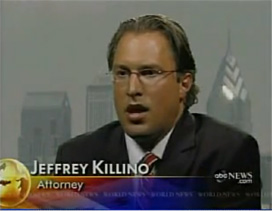
Catastrophic child and birth injuries can shatter the lives of not just the babies and children, but also their families. Families are left to navigate a complex maze of medical challenges, financial burdens, and emotional turmoil. But, this is where Jeffrey Killino and his team of dedicated lawyers can provide the support and guidance families need most.
For over 2 decades, Jeffrey Killino and his team have secured life-changing results for babies and children facing catastrophic injuries. Our clients gain access to the best medical care, financial security, and peace of mind, knowing their futures are protected.
Jeffrey Killino and his team of child and birth injury lawyers are committed to go beyond securing multi-million dollar settlements and verdicts. We measure our success by our positive impact on our clients’ lives. We’re dedicated to supporting them throughout their journey, even after their case is resolved.
Jeffrey Killino and his team of child and birth injury lawyers are committed to more than just securing multi-million dollar settlements and verdicts. We measure our success by our positive impact on our clients’ lives, helping them access the best medical care, achieve financial security, and find peace of mind. We also actively work to prevent injuries and promote safety for everyone.
Text With Us
We'll text you!
"*" indicates required fields
By submitting, you agree to be contacted about your request & other information using automated technology. Message frequency varies. Msg & data rates may apply. Text STOP to cancel. Privacy Policy
Call Me
We'll call you!
"*" indicates required fields
By submitting, you agree to be contacted about your request & other information using automated technology. Message frequency varies. Msg & data rates may apply. Text STOP to cancel. Privacy Policy
Book A Consultation
We're ready to answer your questions!
Email Us
We're available by email!
"*" indicates required fields
By submitting, you agree to be contacted about your request & other information using automated technology. Message frequency varies. Msg & data rates may apply. Text STOP to cancel. Privacy Policy
Text With Us
We'll text you!
"*" indicates required fields
By submitting, you agree to be contacted about your request & other information using automated technology. Message frequency varies. Msg & data rates may apply. Text STOP to cancel. Privacy Policy
Call Me
We'll call you!
"*" indicates required fields
By submitting, you agree to be contacted about your request & other information using automated technology. Message frequency varies. Msg & data rates may apply. Text STOP to cancel. Privacy Policy