When Can a Firearm Defect Injure a Child?
Though a great many firearm injuries sustained by children result from the negligent storage of firearms, such injuries may also occur as a result of a defect in a firearm’s manufacture or design.
When an adult uses a defective firearm while a child is nearby, a malfunction may injure not only the user but the child bystander, as well. Even when minors are using a weapon and are properly supervised and trained in the use of firearms, tragedy may nevertheless result when a defective firearm malfunctions.
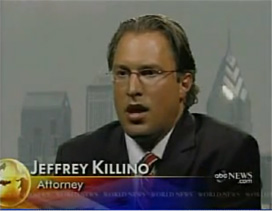
If your child was injured by a suspected firearm defect, Jeffrey Killino and the Child Injury Firm team can review the circumstances and explain the evidence needed to evaluate a claim. Contact the firm for an initial case review.
Which Firearm Defects Can Create Safety Risks?

Firearms are used in the United States for self-defense, recreation, and hunting. Weapons carry a high level of inherent risk and danger for all involved, but when the risk comes from a defect in the firearm itself, accidents leading to injury or death are far more difficult to prevent.
Defects in firearms may increase the risk of weapon misfire, explosion, injury, or death, putting adults and children at extreme risk. A defectively designed or manufactured firearm can malfunction without warning and at any time. Defective firearms have been reported to discharge even with safety mechanisms engaged and without a user’s finger on the trigger.
Common firearm defects that may cause a firearm to accidentally fire include
- Defectively designed or manufactured trigger components
- Ammunition defects
- Pump defects
- Lever defects
- Bolt defects
- Safety feature defects
Which Laws Can Affect a Defective Firearm Injury Claim?
Guns are not subject to the same sorts of consumer product safety standards as are many other items purchased and used by the general public. The Federal Consumer Product Safety Act (codified at 15 U.S.C. §§ 2051-2089), which prescribes health and safety standards for a wide array of consumer products, specifically exempts firearms and ammunition from the Act’s purview.
Though some states have enacted their own laws that impose safety requirements regarding the design and manufacture of firearms, many states have not. State laws regulating firearm design may include provisions requiring the inclusion of certain safety features or certain types of testing, such as drop and fire testing, before the firearm can be sold in that state.
Historically, in states that had not enacted firearm-design legislation, the only method by which manufacturers could be persuaded to implement safety features into their designs was the institution of civil product-liability litigation.
When Can a Product-Liability Claim Involve a Defective Firearm?
Federal law, including the Protection of Lawful Commerce in Arms Act, limits certain actions involving firearms. The statute also contains exceptions, including a specified design/manufacturing-defect exception with important conditions. A lawyer must assess the actual claim and applicable exception rather than assume that every negligence claim is barred or every product claim is permitted.
The federal statutory text and applicable state law should be considered together. The type of defect, the manner of use and the cause of the harm can affect whether a claim may proceed.
Who May Be Responsible for a Defective Firearm Injury?
The product-liability laws applicable to defective firearms vary from state to state, but generally provide that the seller as well as the manufacturer of a defective firearm whose defect is a cause of a plaintiff’s injury may be held liable for damages sustained in a product-liability action.
Product-liability law also generally allows recovery against anyone in the chain of a product’s distribution. The manufacturer or distributor of a single component of a firearm may, therefore, be held liable in a product-liability action if the component’s defect is found to have been a cause of the plaintiff’s injuries.
Which Types of Defect May Support a Firearm Injury Claim?
Product-liability law generally allows a plaintiff to recover damages that result from a defective-product injury if a defect in the product’s manufacture or design is found to have been a cause of the plaintiff’s injury. Such actions may also be brought when a product contains inadequate warnings or instructions. Thus, the sale of a firearm without adequate warnings of its dangers or without instructions regarding its safe use, storage, and maintenance may give rise to a product-liability claim if a plaintiff was injured as a result of the inadequate warnings or instructions. The law of product liability is complex in many respects, and requires the expertise of an attorney with knowledge and experience in this particular area of law.
How Does a Product Defect Differ From Careless Storage or Supervision?
An accidental shooting may raise questions about a person’s conduct, a product defect or both. A product claim must identify the alleged defect and connect it to the harm. Careless storage, access or handling does not by itself prove that the firearm was defective.
Which Evidence Should Be Preserved After a Suspected Firearm Malfunction?
Retain medical records, incident information, witness details and available product documents. Do not handle, alter or attempt to test a firearm to reproduce an incident. Immediate safety and appropriate professional evidence handling come first.
Does an Unintended Discharge Prove That a Firearm Was Defective?
No. A discharge can involve a product problem, handling, maintenance or other circumstances. The investigation must distinguish those possibilities using the actual evidence. A statement that the safety was engaged can be important, but it is not a substitute for examining the mechanism and the sequence of events.
The relevant question is what caused the harm in this incident. Product documents, witness accounts and an appropriate expert examination may help evaluate that question without assuming a defect from the outcome alone.
Why Should the Product’s Condition Be Documented Before Examination?
Alteration, repair or an informal demonstration may change material evidence. A lawyer can help arrange a preservation and inspection process appropriate to the item and the investigation. Records should identify the product, its available history and who handled it after the incident.
Preservation does not mean that a family should keep an unsafe firearm accessible. Appropriate authorities and qualified professionals should direct safety and handling arrangements. Families can retain the paperwork and communications available to them without attempting their own tests.
How Can You Discuss a Defective Firearm Injury With a Lawyer?
If your child was injured by a defective firearm, you may be entitled to compensation from the weapon’s manufacturer and anyone else in the chain of the weapon’s distribution. Defective-firearm and child-injury lawyer Jeffrey Killino has tremendous experience and knowledge in the law of weapon liability and will counsel you through the legal process with patience and compassion. Contact attorney Jeffrey Killino at 877-875-2927 today for a free evaluation of your case.