


Hundreds of Millions of Dollars Have Been Recovered for Injured Babies and Children
Fill out and submit the form below for a confidential doctor/lawyer review:
"*" indicates required fields
Toledo is a city built on resilience, but for too many new parents, the delivery room becomes a place of unexpected trauma. We have served families in Ohio and across the country for decades, and if there is one truth our Team of Lawyers at The Child and Birth Injury Firm has uncovered, it is that “accidents” are often symptoms of a larger problem.
When a hospital administrator in Lucas County sits you down and says, “We did everything we could,” they are hoping you don’t know the statistics. We don’t just nod our heads. We compare your experience against the data, and we dig for the truth.
You deserve to know the landscape of local healthcare. The data for Toledo and Lucas County reveals a troubling reality that goes beyond simple “bad luck.”
In recent reports, Lucas County has struggled significantly with maternal health outcomes. According to the March of Dimes 2025 Report Card, Lucas County received a failing grade (“F”) for its preterm birth rate, which has consistently tracked near 11.8%—significantly worse than the national average.
High rates of infant mortality and injury in a specific county often point to systemic issues. According to The Joint Commission (the organization that accredits US hospitals), human factors like understaffing and fatigue are leading root causes of “sentinel events” (severe patient injuries). In a stressed system, distress monitors get ignored, and C-sections get delayed—turning a routine birth into a tragedy.


To hold a hospital accountable, we must first clarify what actually happened. Hospitals often blur the lines, but the legal distinction is sharp:
Bringing a new baby home to Toledo, Maumee, or Sylvania should be a celebration. But for the families we help, that happiness was stolen by negligence.
You might be asking yourself if your doctor missed a warning sign. You might be wondering if the hospital cut corners. We are here to help you understand what is going on. We look at the hard numbers in Lucas County, and we investigate—in plain English—whether your child’s injury was a tragic twist of fate or a preventable mistake made by a medical professional.


While Toledo is a hub for medical care in Northwest Ohio, the local data reveals a system under immense pressure. It is easy to assume that birth injuries are rare anomalies, but the statistics suggest they are a persistent public health challenge that parents need to be aware of.
We often hear about Infant Mortality (deaths), but we rarely hear about Infant Morbidity (injuries). The two are deeply connected.
The most concerning metric for Lucas County is its preterm birth rate.
When these preventable errors occur, the cost is astronomical.


This is the core question of every case. A bad outcome does not automatically equal malpractice; sometimes, complications are unavoidable. However, malpractice occurs when an injury was preventable. While hospitals often characterize birth injuries as “unfortunate events,” the reality is that many severe disabilities—like Cerebral Palsy or brain bleeds—result from a medical team failing to follow safety rules. We investigate to determine if a timely intervention could have changed the outcome.
Medical malpractice occurs when a doctor, nurse, or hospital worker fails to perform their duties as a “reasonable” medical professional would. It is about breaking the rules of safety. Under Ohio law, certain birth injuries are considered medical malpractice, which impacts your legal options and the deadlines for filing a claim. Common causes of preventable birth injuries include failure to provide necessary prenatal care, mistakes during labor or delivery, and failure to recognize and respond to complications immediately following birth.
Think of it as a violation of safety rules. If you are obeying the speed limit and a tree falls on your car during a storm, that is an “Act of God.” But if you ignore a stop sign and t-bone another car, you violate the rules of the road. That violation is what makes you liable. Similarly, doctors have “rules of the road” called the Standard of Care. When they break those rules, and an injury happens, it isn’t an accident; it is negligence.
How Errors Happen During Labor When the medical team stops paying attention, the consequences can be permanent. Negligence may takes these forms:
Doctors, nurses, and other healthcare professionals are the medical professionals involved in your child’s birth. The actions or inactions of these medical staff can lead to a medical negligence case if they fail to meet the accepted standard of care. When medical staff or other healthcare professionals do not provide proper care, there are serious legal implications if their negligence causes harm.
Our Team at The Child and Birth Injury Firm conducts a forensic audit of your entire medical file. We comb through thousands of entries to locate the specific ‘point of no return’—the critical timestamp where the medical evidence demanded a change in strategy, but the provider negligently chose to press forward.


Toledo is home to medical hubs like ProMedica Toledo Hospital and Mercy Health St. Vincent Medical Center. These Level III and Level IV NICU facilities possess state-of-the-art technology. However, in our legal experience, the most dangerous element in a delivery room is rarely the equipment—it is the Human Factor.
In large, high-volume systems, technology can actually create new risks if the staff is not properly managed.
Modern labor units are filled with constant beeping from heart monitors, IV pumps, and pulse oximeters.
In malpractice law, we look for a specific breakdown known as “Failure to Rescue.”


When a delivery goes wrong, the consequences are often permanent. We are not talking about minor scrapes that heal in a week; we are talking about life-altering trauma that reshapes a family’s future. These injuries frequently become the foundation of legal claims because they were often preventable. Whether caused by a failure to monitor, a delay in surgery, or the improper use of instruments, identifying the specific type of injury is the first step in determining if negligence played a role.
Hypoxic-Ischemic Encephalopathy (HIE)


Brachial Plexus Injuries (Erb’s Palsy)

You might think, “It’s my word against the doctor’s.” That is not how it works. The medical records tell the story.
In Ohio, to win a medical malpractice case, we have to prove four things:
To prove the “Causation” part, we use independent medical experts. We don’t ask your doctor’s friends in Toledo. We go outside the area to find unbiased experts who look at the fetal monitor strips. They look at the timeline. Our lawyers have access to top medical experts for testimony, as it is crucial for proving negligence in medical malpractice cases. Having knowledgeable attorneys who are experienced in medical negligence cases is essential to navigate these complex issues, interpret expert findings, and build a strong case for you.
They might say, “Look here at 2:00 PM. The baby’s heart rate went flat. The doctor didn’t order the C-section until 3:30 PM. That 90-minute delay caused the brain damage.”
That is how we win. Facts. Science. Not guesses.


When we audit a file, we are looking for a sequence of events that proves the injury was preventable.


H2: Who Will Care for Them When You Can’t?
This is the question that may keep parents up at night. Right now, you are your child’s advocate, nurse, and protector. But what happens 30, 40, or 50 years from now?


Birth injuries can leave a lasting mark on a child’s life and the lives of their family members. Unlike birth defects, which are present due to genetic or developmental factors, birth injuries are often the result of medical negligence or preventable mistakes during labor and delivery. The long-term effects of these injuries can be profound, sometimes resulting in permanent disability, ongoing medical care, and significant financial and emotional strain.
Conditions such as cerebral palsy, erb’s palsy, and brain damage are among the most serious outcomes of birth injuries. These conditions can lead to permanent brain damage, developmental delays, and a lifetime of specialized medical care and therapy. For some families, the reality of a child’s birth injury means adapting their homes, arranging for ongoing nursing care, and facing the possibility of lost wages if a parent must become a full-time caregiver. In the most tragic cases, birth injuries caused by medical malpractice can result in wrongful death, leaving families to cope with unimaginable loss.
Our birth injury attorneys understand the complexities of these cases and the importance of seeking fair settlements for injured clients. Our experienced birth injury lawyers work closely with medical experts to review medical records, gather relevant evidence, and build a strong case that demonstrates how medical negligence led to the child’s injury in Toledo, OH. This process is crucial for holding healthcare providers accountable and ensuring families receive compensation for medical expenses, lost wages, pain and suffering, and the costs of future care.
Navigating the legal process after a serious birth injury can be overwhelming, especially when families are focused on their child’s immediate medical needs. That’s why it’s essential to seek legal guidance from our knowledgeable attorneys who understand the relevant laws and the statute of limitations for birth injury claims in Ohio. With the support of our dedicated legal team, families can gain a clear understanding of their rights and options and pursue the compensation they need to provide the best possible care for their child.
If your family is facing the long-term effects of a birth injury in Toledo, don’t wait to get help. Our experienced medical malpractice birth injury attorneys can offer effective legal representation, a proven track record in medical malpractice cases, and the resources needed to take on hospitals and insurance companies. By acting quickly and working with our skilled birth injury lawyers, you can protect your child’s future and seek justice for the harm caused by medical negligence.


When you search for help near me, you get a lot of results. It can be overwhelming.
You need a team that understands the specific laws in Ohio. While the state places strict caps on ‘non-economic damages’ (compensation for pain and suffering), there are exceptions for catastrophic injuries like permanent deformities or the loss of a bodily function. However, it is important to know that these exceptions only raise the financial cap slightly, not remove it entirely. You need lawyers who know how to navigate those exceptions. When choosing a medical malpractice lawyer, consider their specific experience in med-mal, understanding of Ohio’s damage caps and statutes of limitations, track record with expert witnesses, fee structure, and resources for complex cases.
Our Team of Lawyers at The Child and Birth Injury Firm focuses heavily on this area. We spend our days looking at birth records. We know the science. Our birth injury legal team has the financial resources to cover the costs associated with prosecuting a birth injury case, ensuring that families are not burdened with these expenses.


This is the biggest fear for most families. You are already drowning in medical bills. How can you pay a lawyer?
The answer is: You don’t pay us out of your pocket. We work on a “contingency fee” basis. This means:
Our law firms will front the costs of expert witnesses and medical records and are only paid if the client wins the case.
This levels the playing field. It allows a regular family in Toledo to take on a giant hospital system and fight for what is right.


In Lucas County, there are a few major hubs where most deliveries take place. Our Team of Lawyers at The Child and Birth Injury Firm is very familiar with facilities like these across the country.
While these hospitals have skilled staff and advanced technology (like Level III NICUs), that does not make them immune to mistakes. In fact, sometimes the busiest hospitals are where communication breakdowns happen most often due to overcrowding or “alarm fatigue.”
Here are the main birthing centers in the Toledo area:
A Note from Our Team: Just because a hospital has a “shiny” reputation or a new building doesn’t mean your care was perfect. If you delivered at any of these locations and something felt “off,” trust your gut.


If your child has been diagnosed with a birth injury like Cerebral Palsy or HIE, you need support now. You cannot wait for a lawsuit to finish to get help.
Fortunately, Lucas County has some excellent organizations that can help with therapy, early intervention, and advocacy.
Key Takeaways

We hear many of the same questions from parents.
It is a terrifying thought, but it happens. In the age of Electronic Medical Records (EMR), it is harder to destroy a record, but it is easier to edit one.
You need to be careful here. Ohio has a specific law (O.R.C. 2317.43), often called the “I’m Sorry” Law.
No, if it is structured correctly. We can utilize a Special Needs Trust (SNT). This puts the settlement money into a protected account that can be used for your child’s benefit (vacations, specialized vans, computers, private therapy) without counting as “income” for Medicaid purposes. This allows your child to keep their government benefits while still having the quality of life the settlement provides.
Yes, but it must be done correctly. Housing is a legitimate expense, but to protect your child’s eligibility for government benefits (like Medicaid), the home is typically purchased by a Special Needs Trust (SNT) established under 42 U.S.C. § 1396p(d)(4)(A).
K
Keri S
1 year ago

T
Trisha H
1 year ago
C
Courtney S
1 year ago
R
Rhonda L
1 year ago
M
Michaelene C
1 year ago
C
Corey E
1 year ago
J
Jeanne Y
1 year ago
R
Reggie B
1 year ago
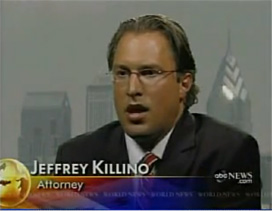
Catastrophic child and birth injuries can shatter the lives of not just the babies and children, but also their families. Families are left to navigate a complex maze of medical challenges, financial burdens, and emotional turmoil. But, this is where Jeffrey Killino and his team of dedicated lawyers can provide the support and guidance families need most.
For over 2 decades, Jeffrey Killino and his team have secured life-changing results for babies and children facing catastrophic injuries. Our clients gain access to the best medical care, financial security, and peace of mind, knowing their futures are protected.
Jeffrey Killino and his team of child and birth injury lawyers are committed to go beyond securing multi-million dollar settlements and verdicts. We measure our success by our positive impact on our clients’ lives. We’re dedicated to supporting them throughout their journey, even after their case is resolved.
Jeffrey Killino and his team of child and birth injury lawyers are committed to more than just securing multi-million dollar settlements and verdicts. We measure our success by our positive impact on our clients’ lives, helping them access the best medical care, achieve financial security, and find peace of mind. We also actively work to prevent injuries and promote safety for everyone.
Text With Us
We'll text you!
"*" indicates required fields
By submitting, you agree to be contacted about your request & other information using automated technology. Message frequency varies. Msg & data rates may apply. Text STOP to cancel. Privacy Policy
Call Me
We'll call you!
"*" indicates required fields
By submitting, you agree to be contacted about your request & other information using automated technology. Message frequency varies. Msg & data rates may apply. Text STOP to cancel. Privacy Policy
Book A Consultation
We're ready to answer your questions!
Email Us
We're available by email!
"*" indicates required fields
By submitting, you agree to be contacted about your request & other information using automated technology. Message frequency varies. Msg & data rates may apply. Text STOP to cancel. Privacy Policy
Text With Us
We'll text you!
"*" indicates required fields
By submitting, you agree to be contacted about your request & other information using automated technology. Message frequency varies. Msg & data rates may apply. Text STOP to cancel. Privacy Policy
Call Me
We'll call you!
"*" indicates required fields
By submitting, you agree to be contacted about your request & other information using automated technology. Message frequency varies. Msg & data rates may apply. Text STOP to cancel. Privacy Policy